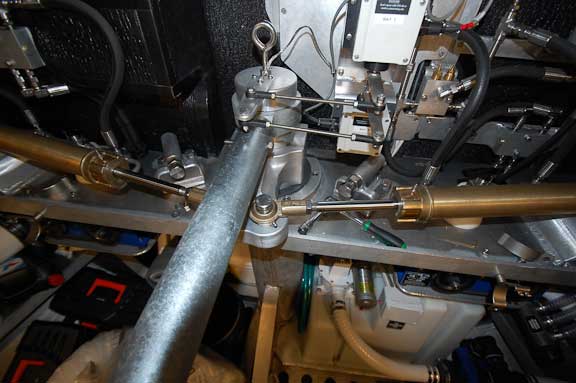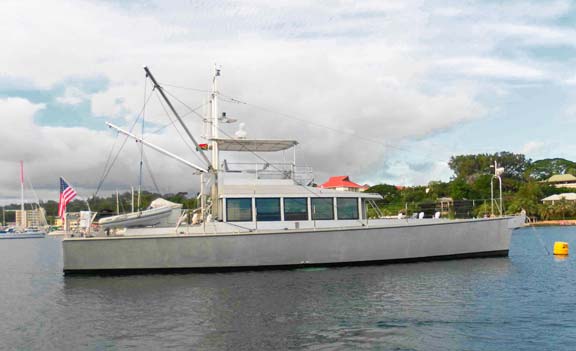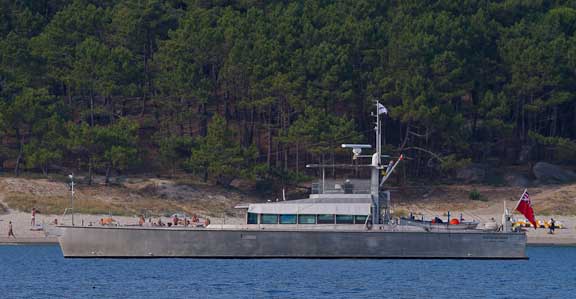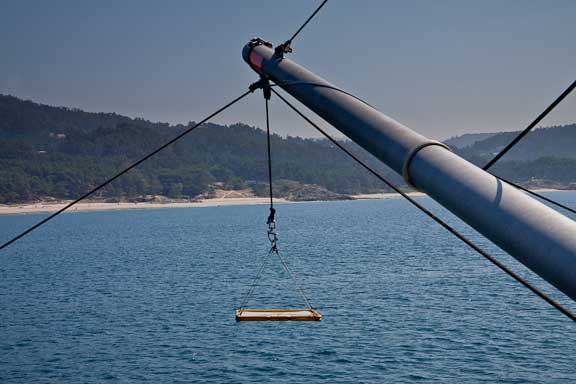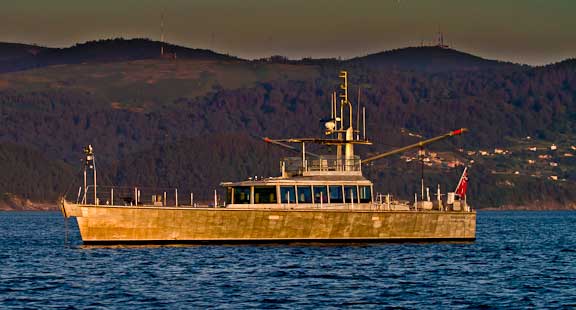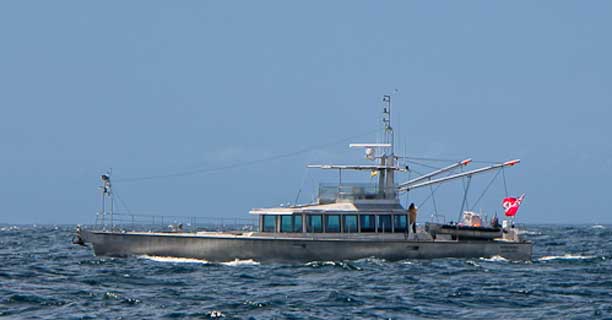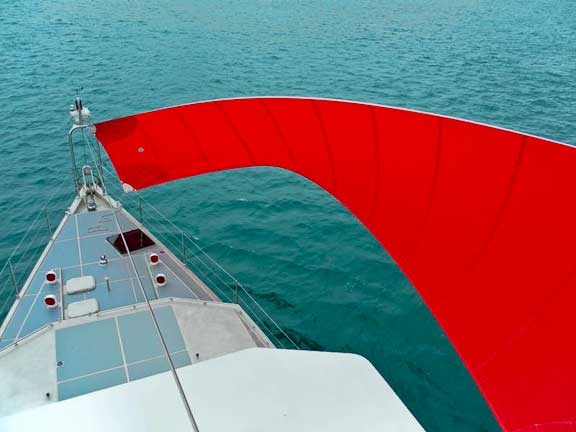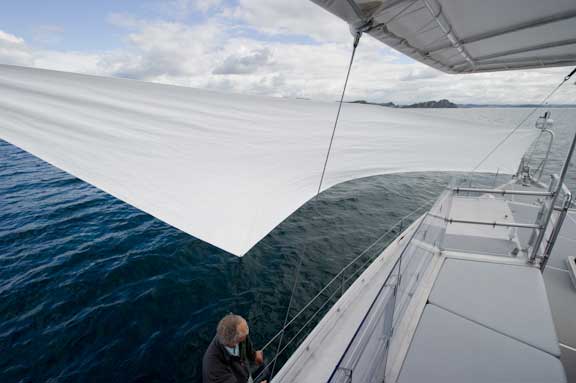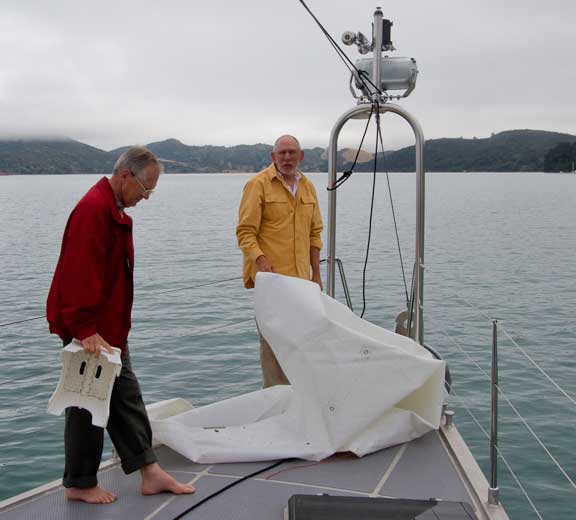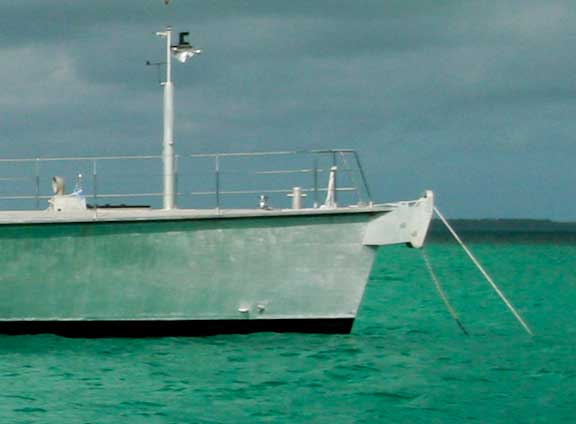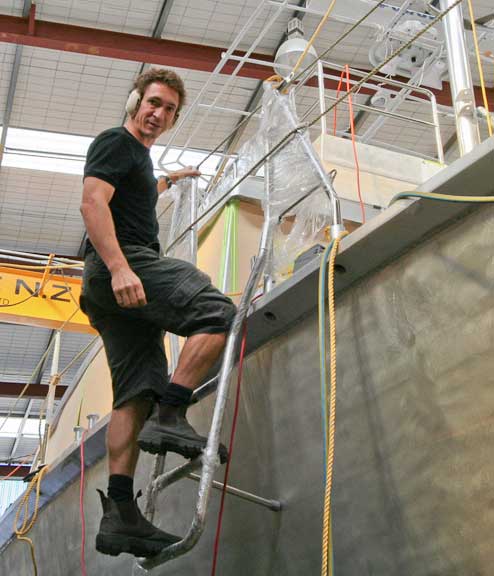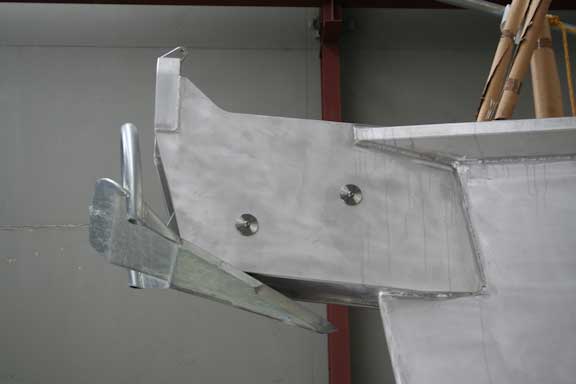
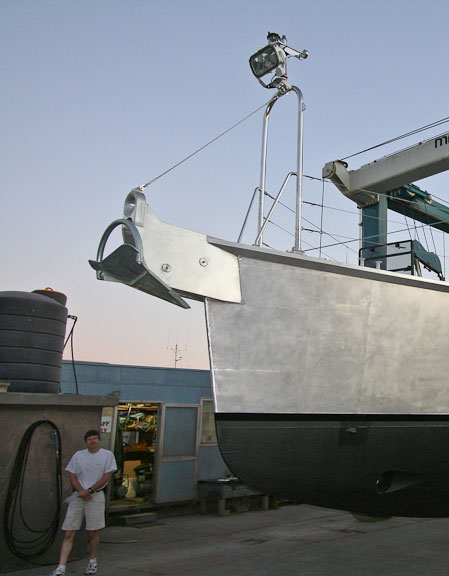
One of the items on the sea trials check list was to test our “steering jib” concept.
Read the rest »
One of the items on the sea trials check list was to test our “steering jib” concept.
Read the rest »
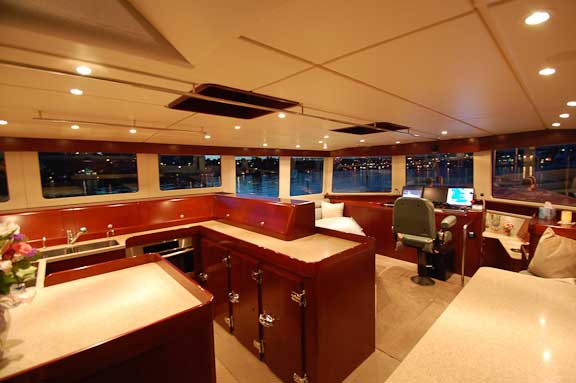
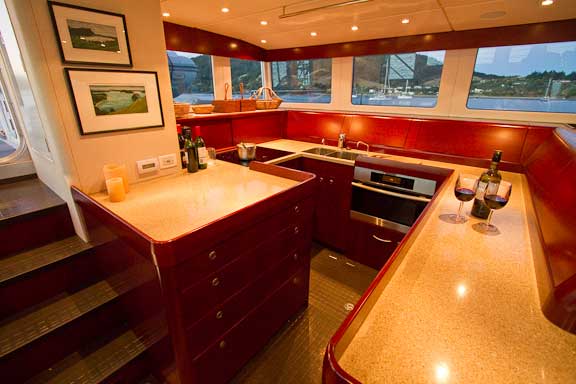
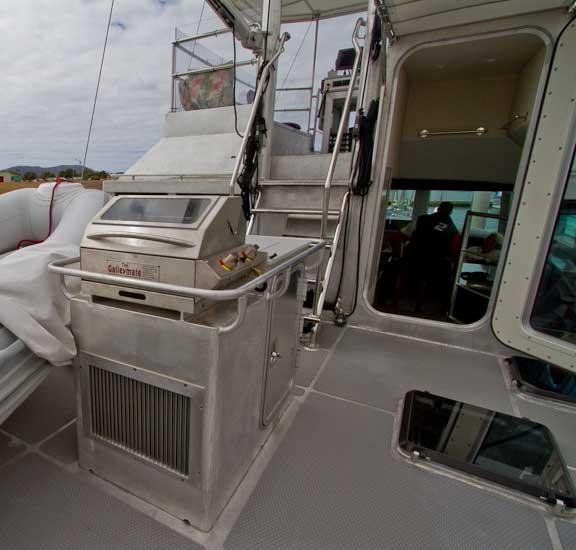
The Bar BQ/sink cabinet which is integrated with the engine room air intake structure has been the source of substantial dialog on the Dashew Offshore team. Todd and Linda were heavily in favor and wanted a large Bar BQ. Steve was inclined to have the smallest unit possible.
Read the rest »
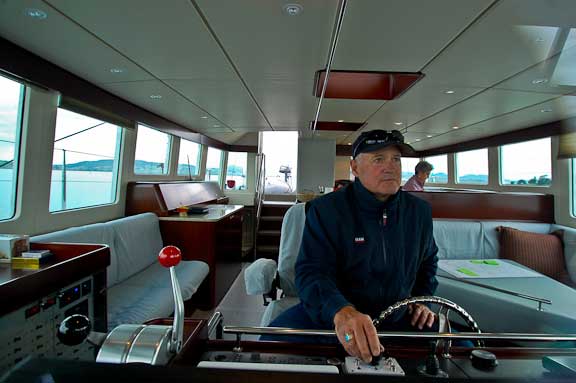
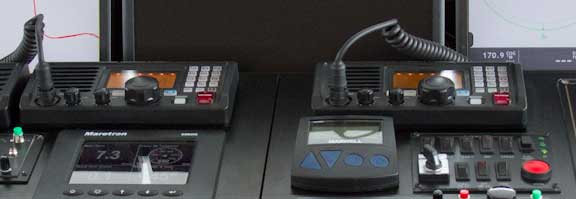
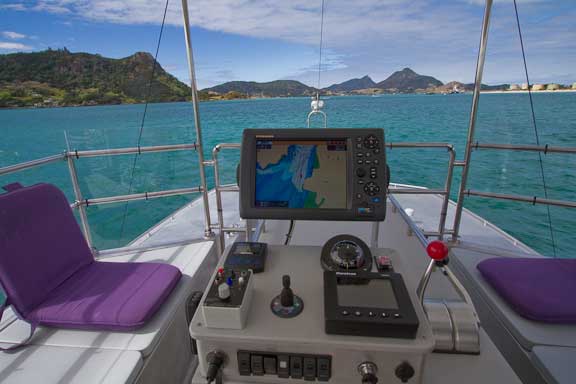
The flying bridge controls have been getting a work out the past week.
Read the rest »
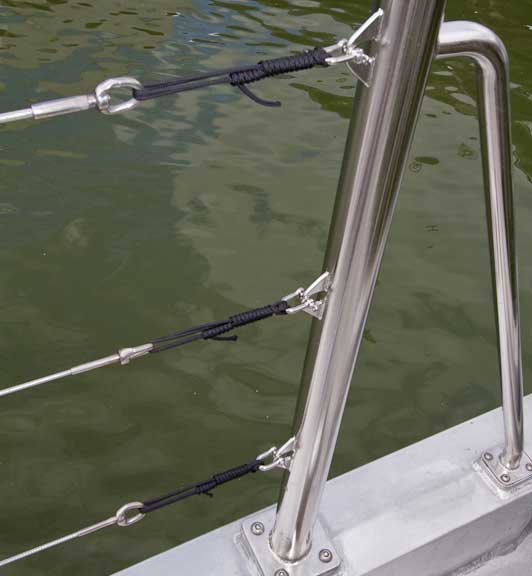
The life lines forward at the mast on the port side and at the forward end of the port dinghy are lashed rather than pinned. There are two reasons for this:
Read the rest »
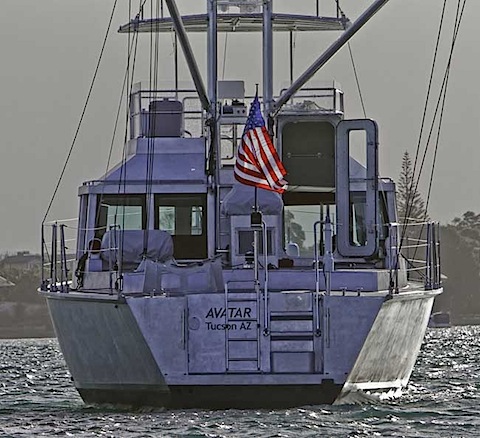
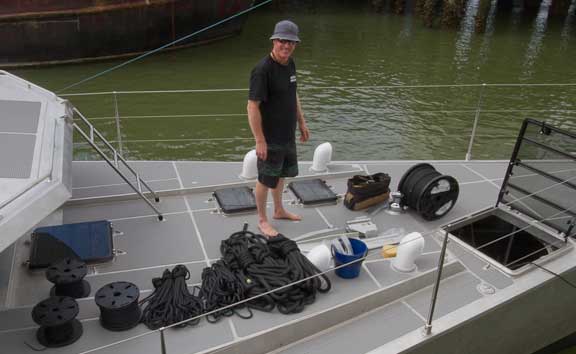
We are always amazed at how much cordage it takes for rigging a yacht. The FPB 64 is proving no exception. That’s Rod Bradley on the foredeck of Avatar, getting ready to stow dock lines and extra rope. Here is what is aboard in the standard specification:
Read the rest »
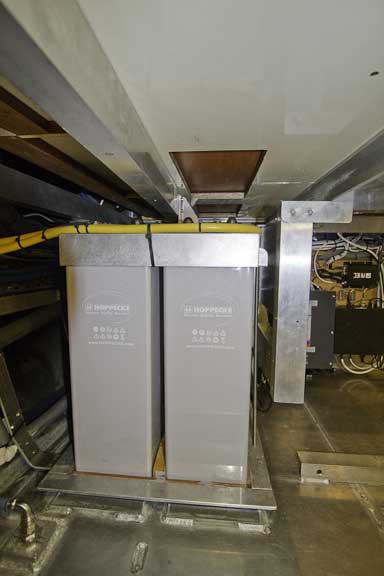
The basement area under the great room on the FPB Series is key to the entire systems approach, not to mention storage. It allows us to position gear so it is easy to inspect and maintain, while providing a huge amount of bulk space.
We will start this tour in the forward port corner looking at half of the ship’s battery bank. Note that the fuel tank tops which provide the basement floor are above the waterline with batteries being a further 800m/32″ above this.
Read the rest »
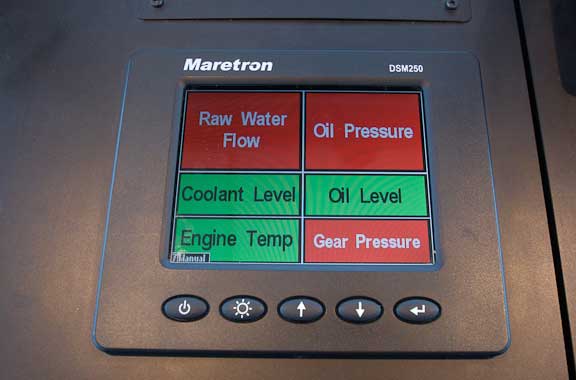
We’ve been learning about the NMEA 2000 Maretron system fitted to the FPB 64s for data management. Our decision to use this system was based on its ability to help the crew process information and make decisions, particularly in an out of the ordinary situation.
Read the rest »
Sea trials are a busy time with testing, sorting out the inevitable gremlins that are part of a new boat, and learning how the boat performs. Our time to document the boat is limited – this is being written at 0430 – and we’ll have lots more details to share a week from now. For today here are a couple of items that have caught our eye.
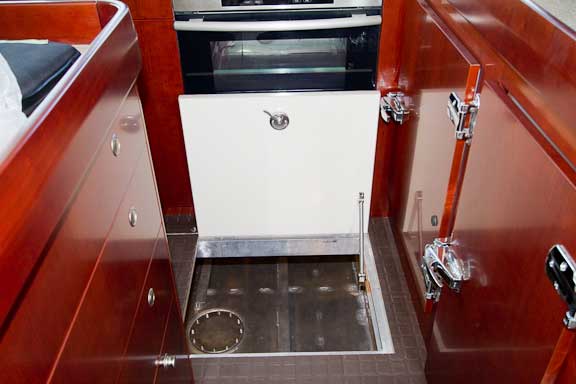
We’ll start with this look at one of the two galley floorboard openings into the “basement”.
Read the rest »
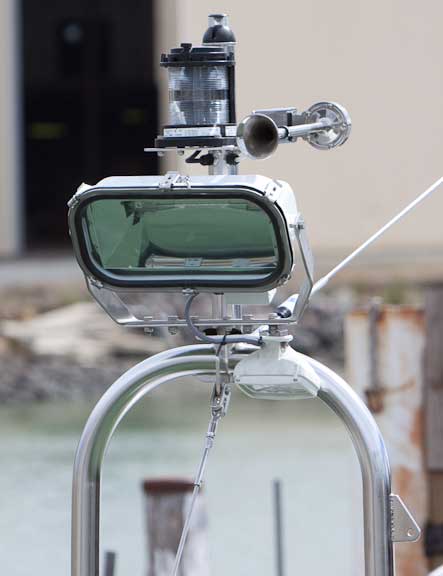
Lets check out a few of the mast details. We’re looking at the top of the foremast.
Read the rest »
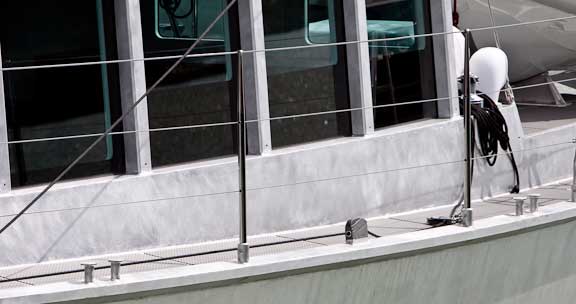
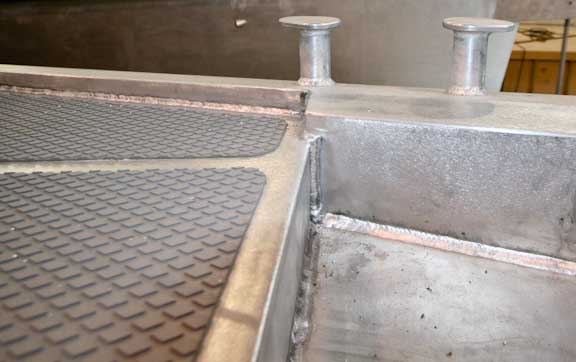
Are you ready for more deck details? We’ll start with some of the gear which is incorporated with the rub rail.
Read the rest »
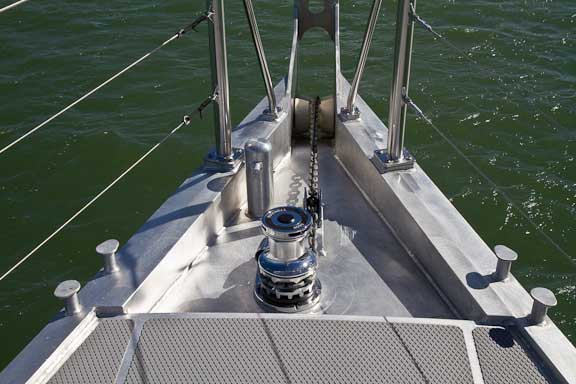
Perhaps a few photos of the deck details will be of interest. We’ll start with an occasion of sorts, the first anchoring. The bollards port and starboard work well in high load situations. Note the depressed foredeck well which serves two functions. One, it reduces the height of the windlass and Sampson post so they interfere less with your seated view on watch. Second, the well works to contain mud coming off the anchor.
Read the rest »
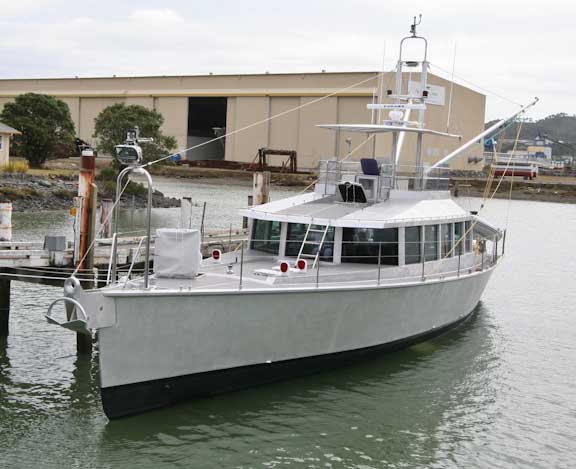
With the FPB 64 out of the clutter of the building hall we thought you might like to see few photos of her hull shape. We’ll start with the bow.
Read the rest »

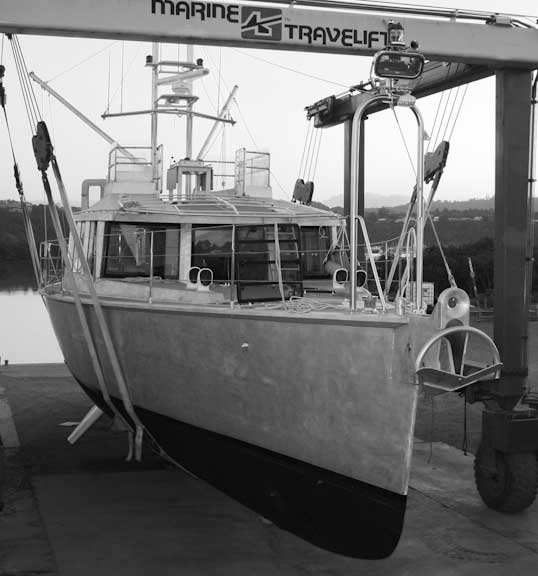
We don’t know about you, but it gives us a thrill to see a new boat finally out of the building shed. But hanging in the slings, the buzz is tempered by a nagging worry about where the boat will float.
Read the rest »

The fairlead over the anchor and the related Sampson post are not easy to execute, hence a costly exercise (not to mention heavy). But we think this is a good investment in terms of weight and budget. Together these two items perform a number us useful functions:
Read the rest »
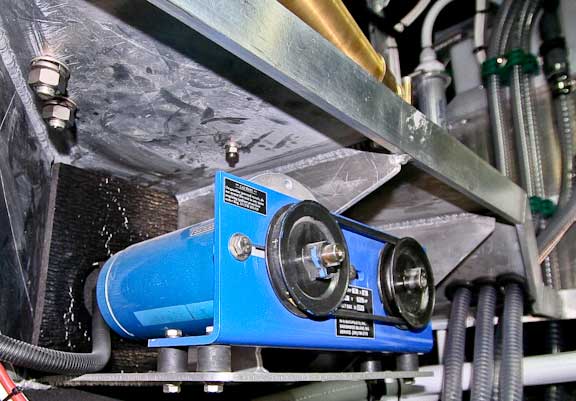
Various pilot manufacturers offer different ways of powering the rudder.
Read the rest »
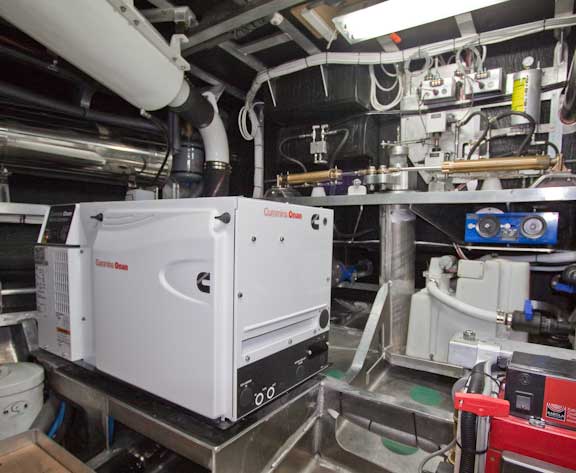
The norm with modern gensets is to put them in a sound shield, which has a huge impact on the noise you normally would otherwise hear. But there are tradeoffs.
Read the rest »
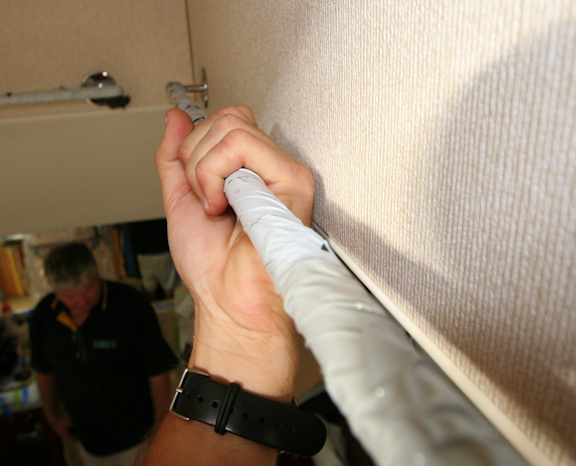
Handrail design and positioning is a tricky art. You want the rails where they are convenient to use, and easy to grip, but not overbearing aesthetically. The photo above is on the starboard side of the entry landing on the first FPB 64.
Read the rest »

We previously wrote about some of the details of the FPB 64 anchor handling system. As Circa just sent us a series of photos of the main anchor (a 240 pound/110kg Rocna) being winched home we thought they might be of interest.
Read the rest »
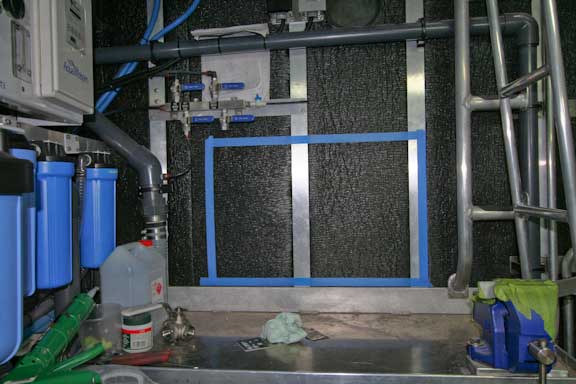
Another batch of photos for art planning, this time of the larger engine room areas, which bring to mind the question about the best color for engine room insulation. Above we are looking at the bulkhead over the workbench. The taped outline is 670 wide x 465 high.
Read the rest »
We have mentioned before we are somewhat obsessive about fire (which is why we have never had one). Watching chafe, good systems installation, and a rigorous cleaning and maintenance schedule reduce the risks to the minimum. Still, you want to be prepared for the worst, which brings us to the photo above.
Read the rest »
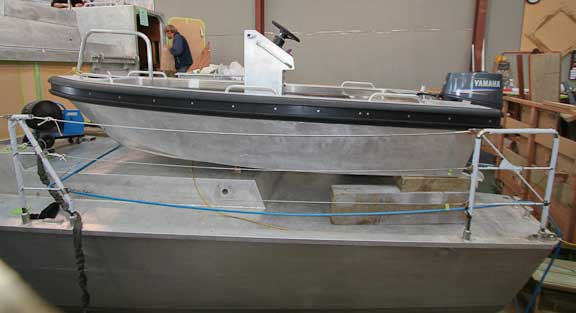
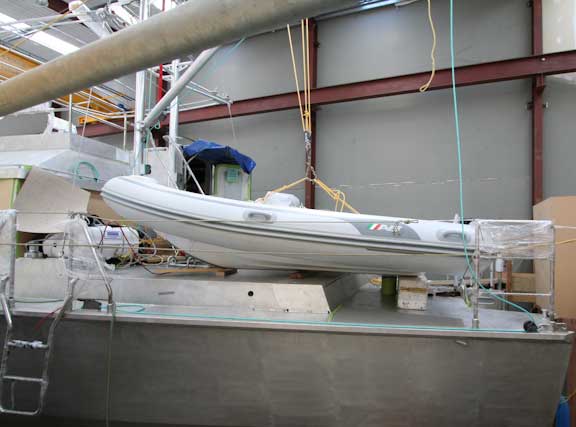
We’ve often wrestled with the decision on dinghy size. Bigger dinks are drier and typically have a more comfortable ride. They also carry more people and gear. On the other hand, past a certain point, the weight of the larger dinghy makes it impractical to drag ashore. For the two of us anything over 300 pounds (136kg) is going to need an anchor off the beach.
The Owners of the first FPB 64 are avid divers. They want a dinghy that can take four passengers and their SCUBA gear at speed to their destination. On their previous yacht (a Sundeer 64) they were limited to an 11 foot (3.4m) inflatable. The FPB 64 aft deck offers more options.
Read the rest »
Here is one of those small but important cruising details, a side boarding ladder. We are on Mk IV on Wind Horse, so this one should be perfect from the start.
Read the rest »
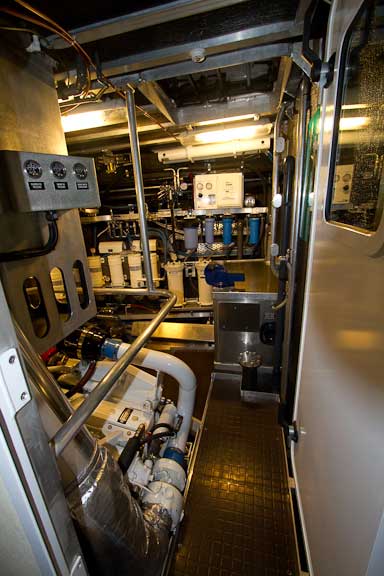
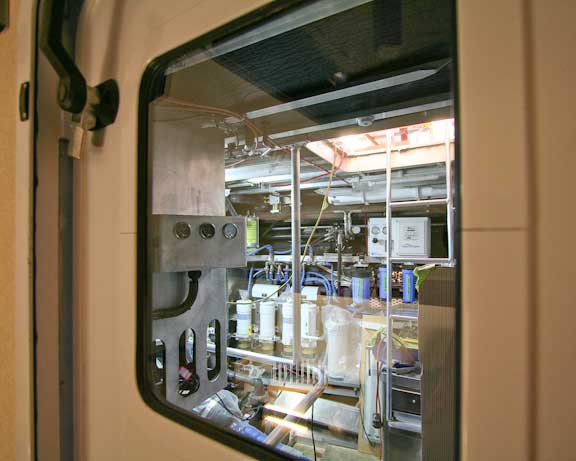
You are looking at a small but important design detail, the window in the engine room door, and the view through it. Note that the mechanical Murphy gauges (center left) are easily noted without opening the door. If you have good eyesight the gauges on the watermaker are also in view.
Read the rest »
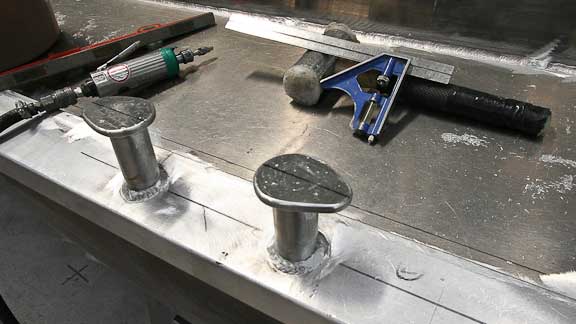
Dock line cleats are a controversial subject at Dashew Offshore. There are some who swear by them and others who swear at them. For getting the boat tied up,and adjusting position when there is wind or current to fight, winches combined with high modulus dock lines are the answer. That’s why we have three Lewmar #40 winches plus the big electric winch aft.
For longer term docking, and once the boat is secure, a case can be made for cleats.
Read the rest »
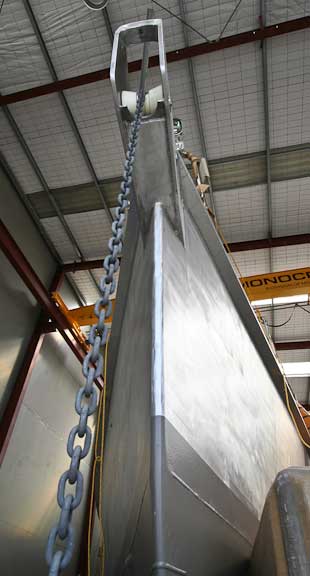
A properly design anchor chocking system will allow the windlass to jam the anchor flukes tight between roller(s) and the base of the chock weldment. If you get it right, the anchor stays fixed in place, with minimal movement as the bow feels waves, or drives through them. The result is a quiet anchor. Any softness, on the other hand, and the noise of the anchor shifting can drive you nuts.
By the way, that is a 240 pound (110kg) Rocna anchor on the bow of the FPB 64.


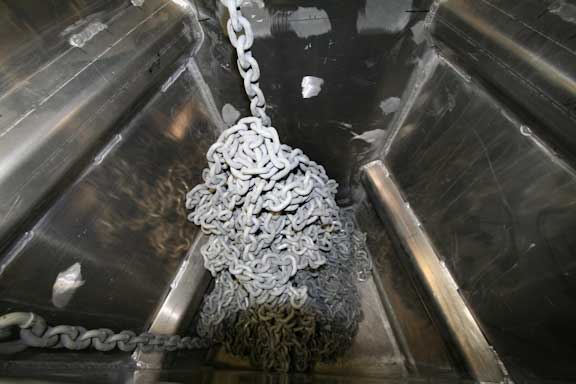
If the system used to handle the anchor chain is right, the chain comes in or goes out at the push of a button. If it is wrong, all sorts of problems can occur, typically requiring human intervention to prevent and or remedy the issues. In this report we will show you a few of the details we employ to get this right.
Read the rest »
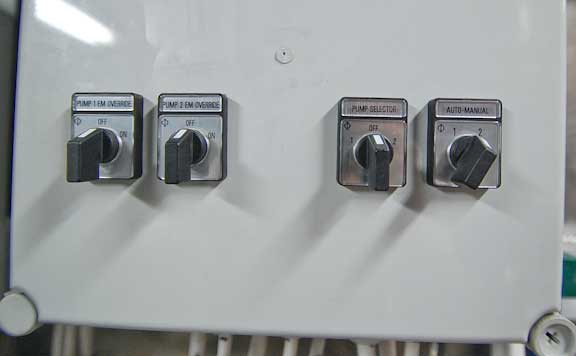
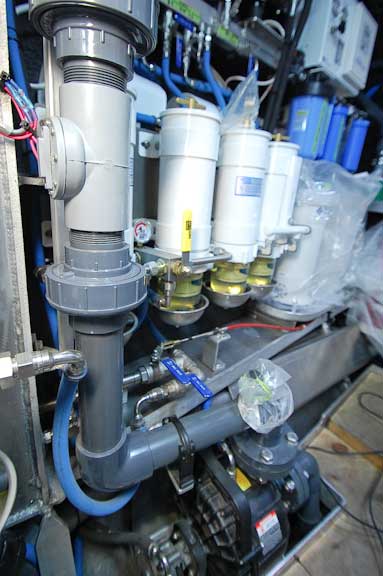
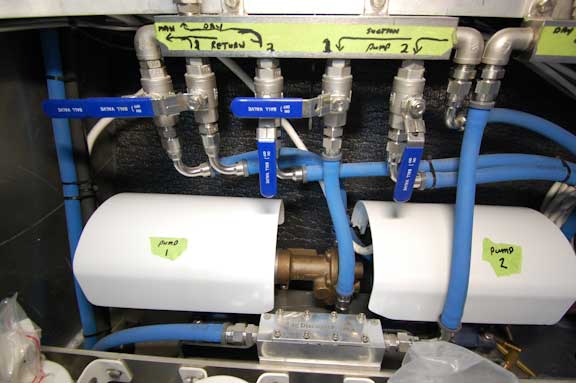
The FPB 64s have a large day tank in the engine room. There are two 1/4HP geared pumps, used one at a time, that fill the day tank from the main supply. These pumps are also used for the fuel polishing system.
The logic and basic control components are the same as we have used for the past 15 years, and the system works as follows:
Read the rest »
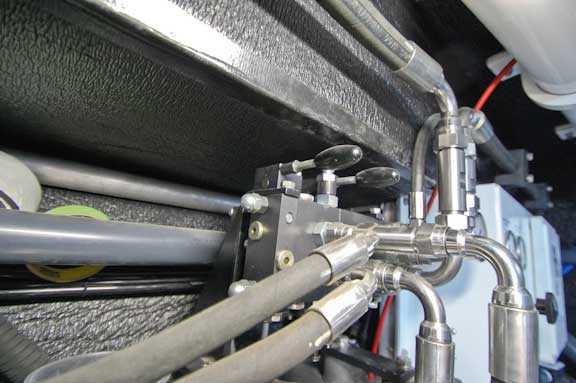
The FPB 64 hydraulic system provides power to the stabilizers and damage control pump. Oil flows from a pump mounted on a transmission PTO through the block valve in the photo above.
Read the rest »
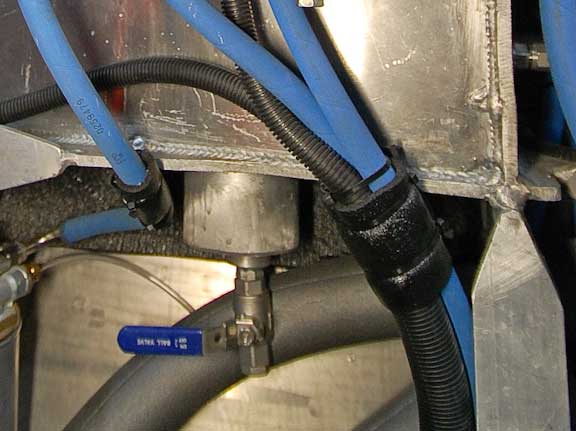
The valve center bottom in the photo above is a small but important detail. This is the condensation drain on the engine room day tank. Note the pipe plug in the valve as a double check. The valve is threaded into a small sump making it easier for water and other gunk to collect at the low point. Normally a sump like this would be drained once a season and you might find a quart/liter of water at the most.
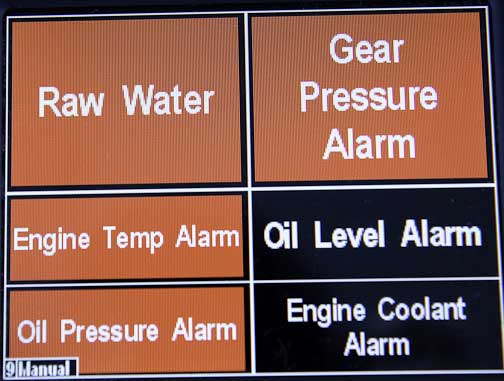
There are a couple of areas where it is important to know if water is flowing (or not flowing). On the FPB 64 these include raw water feed to the engine and through the damage control pump. The light grey device in the upper left hand corner is a vane type flow meter made by Aqua Alarm. A vane senses flow or lack thereof and triggers a micro switch that can be wired normally open or closed.
On the FPB 64 both of these alarms show up on the Maretron NMEA 2000 displays. 
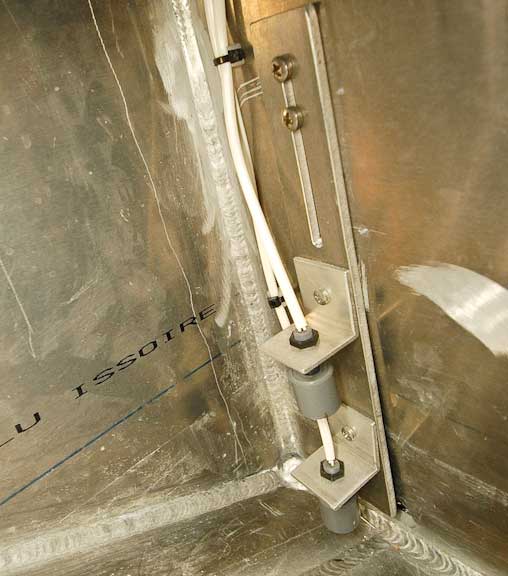
You are looking at a pair of magnetic “reed” switches. The lower unit turns the bilge pump on/off, while the upper gives an alarm signal if the pump fails to keep up. The gray plastic floats contain the magnet which controls the reed switch making the electrical contact.
In the case of the bilge pump, the reed switch is used to trigger a relay through which the current for the pump flows.
We have been using this combination of reed switch and control relay for 25 years and it has proven to be extremely reliable (much better than moisture sensors and mercury float switches).

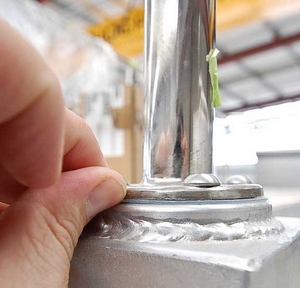
Stainless steel and aluminum are not happy in direct contact, so we fit a plastic isolating washer between the surfaces, as shown above. The stainless steel fasteners are coated with an anti-corrosive compound (the type varies with depending on the situation).

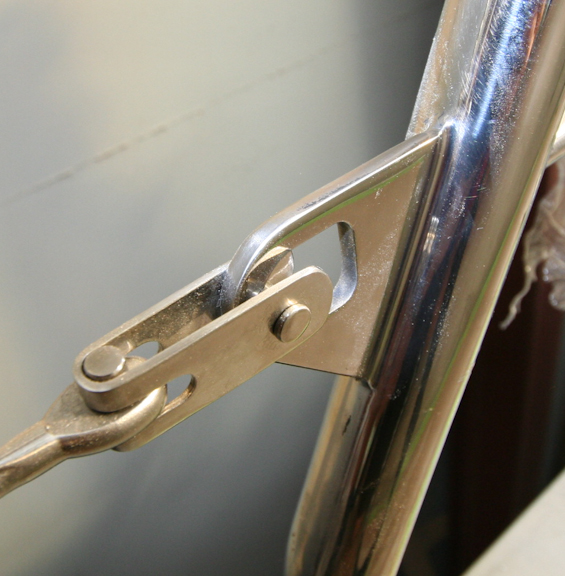
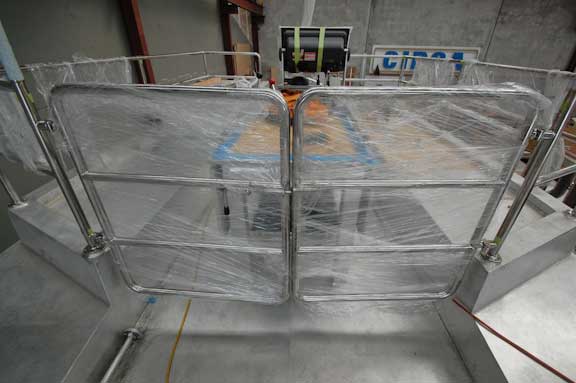
Here is some tricky detailing in stainless steel. We are looking at the “gates” at the forward end of the flying bridge. These, and the other rails adjacent, will have clear Lexan plastic affixed as a wind screen. The gates are designed so they can be opened when you want air flow, and to allow space for an extra couple of friends to sit across the forward end of the table.
Read the rest »
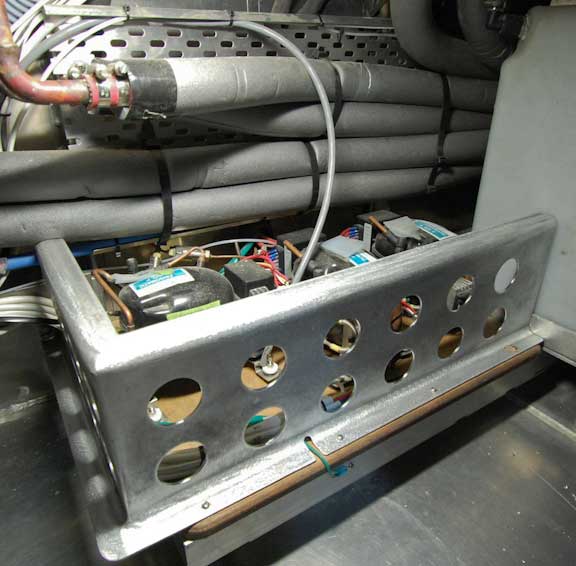
There are three Danfoss compressors, one for each of the two freezers, and a third for the fridge. Combined with evaporator plates and our special box design, with lots of insulation, this system is extremely efficient. We’ve discussed the box design before. What we wanted to show you here are two small, but important details.
Read the rest »
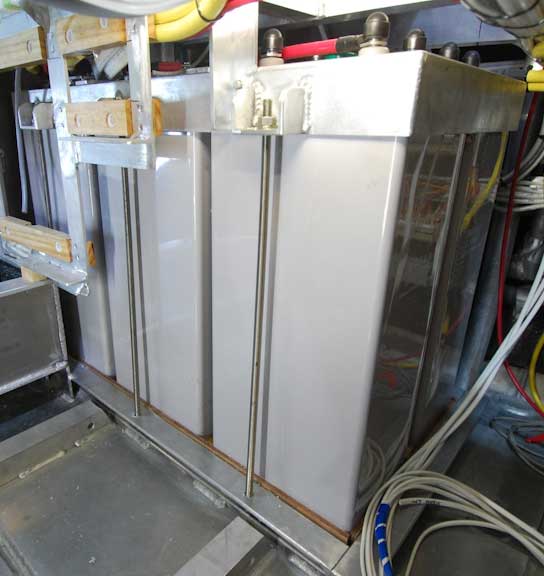
The traction battery bank and its related cabling and structure weights nearly 3000 pounds (1.5 to tons). It obviously needs to be well secured!
Read the rest »
We don’t expect fuel or water leaks in our engine rooms, still it makes sense to take precaution where practical with electrical gear. In the case of the two fuel transfer/polishing pumps protection is provided with the drip shields shown above.
You do have to check to be sure that there is sufficient air flow for cooling. During fuel polishing the pump being used could run upwards of fifteen hours, and it will get warm. Circa will be checking for heat build up here during trials.

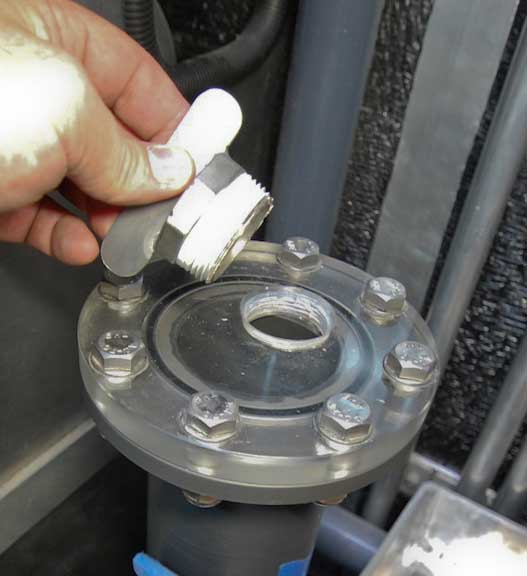
You are looking here at the top of the raw water take stand pipe. The clear plastic lid provides a view of what is going on inside. If you suck up a large plastic bag or clump of weed, remove the plug and a mop handle can be used to clear the debris. This lid is above the load waterline so in smooth water no leakage should occur with the plug removed.

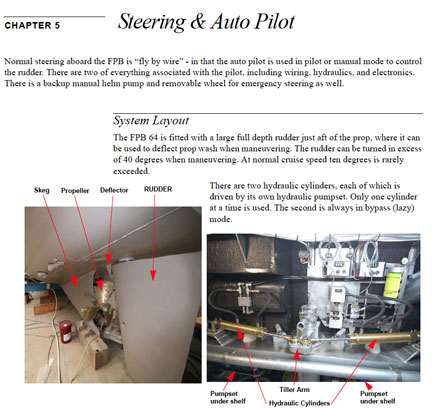
Even though we have dual isolated hydraulic steering systems we still want to have an emergency tiller aboard. Its primary purpose is to secure the rudder amidships if you are disabled and hove to behind a parachute anchor.
Read the rest »
The upper of the two valves shown here controls the flow to the two diesels and boiler (through their respective filters). Note the bellcrank with attached Morse cable opposite the handle. The Morse cable runs to the bulkhead in the aft starboard cabin where it is in close proximity to the air vent shut off and manual fire extinguisher controls. Should the need arise in an emergency fuel and air can be quickly shut off. 
How big should your raw water strainer(s) be? We are not sure, but we have two of these enormous (and very costly) Hayward strainers on the FPB 83 Wind Horse, and they have served us well.
We have never seen more than a quarter of the baskets filled, even in debris filled waters after hundreds of hours of operation. The same pair of overcapacity strainers is being used aboard the FPB 64s.

We have always been amazed at how much space it takes for electronics installations. Not the control heads, but the black boxes and various interfaces. Although we have continued to add space for this over the years, the quantity of gear aboard has grown even faster. With the FPB 64 we have finally caught up.
Read the rest »Systems details make a big difference in longevity, trouble free operation, and security.Over the next few weeks we will be bringing a series of these to your attention, so check back often. We’ll start with the raw water manifold in the engine room.

We have previously mentioned the hard anodized aluminum weldment fabricated by Circa for the raw water manifold. What we want to show you here is one of the two inspection and/or clean out ports.
Small details like this won’t come into play for a few years. But as the boat ages they become invaluable.

Designing an engine room air intake system is a complex process, full of tradeoffs. Before you start you need to have a clear goal for the system. For us this is simple: we want a system that minimizes water incursion through a variety of weather conditions with the boat upright, knocked down, and inverted.
How do we accomplish this?
Read the rest »
You are looking at a chafe section on the high modulus dock lines we have been using aboard Wind Horse. After 45,000+ miles of cruising, much of it in rough surroundings when docked, this original inventory is still going strong.
The outer cover is polyester and their primarily as a first line of defense against chafe (it contributes little to overall strength.
We’ve discussed the advantages of high modulus dock lines before, but to recap:
Read the rest »
Batteries and DC power systems are a subject of discussion wherever cruising yachts meet. The system we are using in the FPB Series is based on industrial quality traction batteries (so called because they are used in forklifts, railroad systems, and other heavy service applications). Our first experience with traction batteries was in 1988 with Sundeer. Every yacht we have done since has used these wonderful batteries.
Read the rest »
Last night we were going through an old stack of yachting magazines and came across a write up on a well known yacht builder’s latest offering. This sixty five footer came with everything, even a tool kit (with a photo in the article). That tool kit was one of the small plastic cases with a variety of basic tools. We had a good laugh, and then thought you might like some ideas on what should be aboard a well equipped cruising yacht.
The basic stuff is easy. It is the specialty items which often make the difference between success on your own or needing outside help. You can have the greatest spare parts inventory in the world, but without the right tools you are helpless. (For a look at the spares which come with the FPB 64 click here).
As the tools for the first FPB 64 have recently been shipped we have a few photos and some comments to share. This selection is based on what experience has taught us over the past 30 years.
Read the rest »
Nothing in yacht design and cruising evokes such discussion as anchors and their related gear.One anchor or two, chain or chain + rope, CQR, Danforth, or Rocna anchor type, electric or hydraulic power? We’ve fitted just about every combination you can imagine, and after 40 years of testing here is what we have learned.
Read the rest »
We’ve just had some photos from Greg Weekes at Berthon’s where Wind Horse is patiently awaiting our return. We left them with a short list of projects to fine tune some details that have been bugging us (the list is very short). We’ll start with a new exhaust extension for the Kabola diesel heater.
Read the rest »

Big alternators require substantial air flow to keep them cool.This requirement is often at odds with the need to protect the drive belts.
Read the rest »
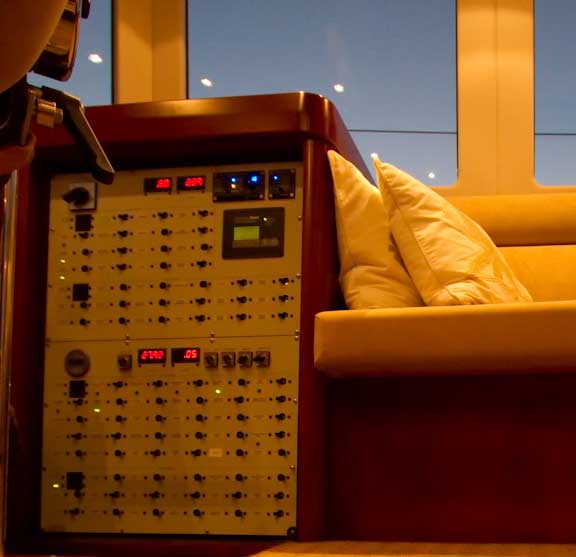
We have a few photos of the electrical panels on the first FPB 64 to share. We’ll start with the AC panel shown above.
Read the rest »

You are looking at the business end of a Spurs propeller shaft line cutter. These are a part of the standard specification on the FPB64. In 45,000 miles of cruising on the FPB 83 Wind Horse we have yet to permanently wrap a line around the props (and being outboard they are at more risk than the centerline prop on the FPB 64) so the combination of full protection from the skegs and the Spurs line cutters is working.
There is no more complex subject in yacht and ship design than propeller engineering. It is hard enough that the US Navy has spent billions of dollars on the subject. Yachts are even more difficult as they have to operate in a wider range of conditions relative to their size.
We have extensive experience with sailing designs and feathering, folding, and controllable pitch props used thereon. We’ve also been able to do real world testing with several of our sailing designs to establish baseline data. All of this is covered in detail in Offshore Cruising Encyclopedia , so we won’t elaborate here.
Powerboat props are easier to dial in – at least in theory – than those for sailboats. Where the loads vary substantially with a sailboat, from motoring in light air, to motorsailing, power boats have only the extra drag of waves and wind with which to contend.
Still, there are a host of issues to consider. As we are presently reevaluating the props on Wind Horse (FPB 83), we thought you might like to share in the reasoning.
Read the rest »
We want to chat about thruster tunnels. We’ve mentioned these before, but this series of photos will help us to elaborate.
This straight on the bow photo allows the eye to follow the lines of the hull. You can just make out the aft edges of the bow thruster tunnels. The intersection of thruster tunnel and hull are faired to reduce turbulence.
Read the rest »
Circa have just sent us photos of the first of the upholstered headliner panels. Note the reveal between the panels.

This is a detail we first employed on the 78 foot ketch Beowulf back in 1995. We used it again on the FPB 83 Wind Horse and love the aesthetic it helps to create. This is not easy (or inexpensive) to execute, but we and Circa think the end result is worth the effort.
If you click here you can view a slide show with lots of interior shots of Wind Horse which will give you a feel for how the headliner design works.

Modern yachts have a bewildering array of electronics wiring and black boxes. These tend to get hidden away making installation and fault checking a challenge. The basement design offers us the potential to solve this problem for the builder, and make the Owner’s life easier when he wants to add or update his electronics.
Circa is starting to connect the inside bridge controls and electronics on the first FPB 64. The cables which connect to the control heads (we’re looking at the underside of the bridge desk here) are pretty simple. It is wear these connect to their black boxes that it gets complex (when we show you the finished wiring in a couple of months this will be neat and orderly).
Read the rest »
The design of the flying bridge seating, table, and instrumentation is something we wrestled with on Wind Horse (FPB prototype). There were dozens of drawings, and numerous mock ups in our office and on the boat. With the advantage of 45,000 miles of experience the FPB 64 design was much easier.
We’ll start with this series of 3D drawings, and then show you photos of the real thing now going together on the first FPB 64.
Read the rest »
A large percentage of the propulsion noise on most engines comes from the exhaust system being in contact with the structure of the boat. This is a particularly difficult problem to solve on most designs. However, if you have an aft engine room achieving a favorable result is easier.
On the FPB 64 the exhaust system is totally isolated from contact with any structure. This starts
Read the rest »
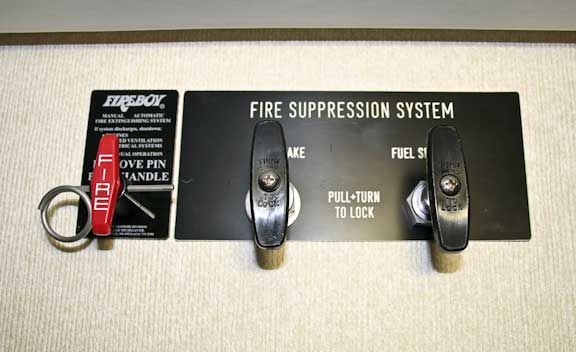
We don’t worry about heavy weather, or hitting debris, but the concept of fire has always scared us. We do everything we can think of in the boat to mitigate the risks, and have yet to experience a problem. But this is still the one thing that really concerns us.
The engine rooms are, of course, fitted with fire suppression gear. There is a manually operated fire dampener in the air intake for the engine room, and this Morse cable controlled fuel shut off valve. The control handle for this, the fire dampener, and the manual trigger on the fire extinguisher are located next to the engine room door.
When the fuel supply valve is closed fuel is cut off to the diesel heater, genset, and main engine.

A cruising yacht needs to carry lots of lube and sometimes hydraulic oil. We like to have enough for at least four changes. We assume that the FPB 64 will carry the following as a minimum:
These items could be stored in the basement, but it is more convenient to store the majority of them under the swim step in the engine room in this area between the reinforcing structure, and in the next bay forward.


You are looking at a propeller shaft brake on the FPB64. This device uses an eccentric cam to apply clamping pressure to the shaft coupling. This makes the job of checking coupling bolt torque easier, and assists in changing the flexible coupling should this ever be required at sea where the boat’s motion otherwise would be moving the prop. It will also come in handy should the emergency sailing rig be required.
Todd Rickard and I are just back from a whirlwind trip to New Zealand; three eighteen-hour/one meal days working with Circa. We’ll detail what we found in subsequent blogs. There are many photos to show you. Right now we want to share a few thoughts on aesthetics and the boat ownership experience.
Read the rest » 

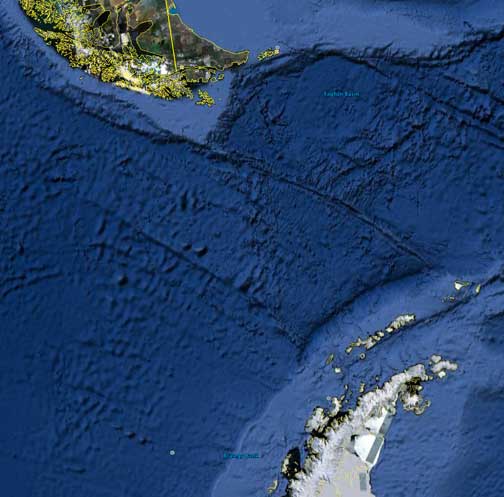
We’ve been aground in the office in Arizona for six weeks, enough time to get caught up and start thinking about next year’s testing afloat. All options are on the table. Returning to the US East Coast via Iceland and Greenland sounds intriguing, as does the South Pacific via the Canary Islands, Panama and the Galapagos. There is also the Med. option.
Lots of factors play into the decision. We are used to this of course. But what is surprising in this decision making cycle is the part which comfort at sea seems to be playing.
It didn’t used to be this way.