


FPB Owners: Living Well & Going Places!
There are 18 FPBs in the line. FPB owners are traveling to faraway ports and blogging about it.
Read More!Why FPB? The Concept Explained...
The FPB fleet is judged to be the best ocean-crossing motor yachts today. To find out why, read on.
Latest Posts In The Logs Column!
Read latest 100 articles and comments
The FPB programme has closed following Steve and Linda Dashew's retirement. For any and all enquiries, please contact fpb@berthon.co.uk
The Concept
So Ends This Voyage

The Nespresso coffee machine hisses in the background as Linda makes a change-of-watch latte. The faint glow under the eastern clouds heralds another beautiful morning at sea. [Read the rest »]
Interior Design and FPB: Thoughts From Designer Denise LaVey

We’ve worked with many interior designers over the years, but Denise is the first who truly understands what the FPB concept is all about. We think her work for us aboard FPB 78-1 Cochise speaks for itself…
[Read the rest »]
FPB 64 Owners Do It Right!
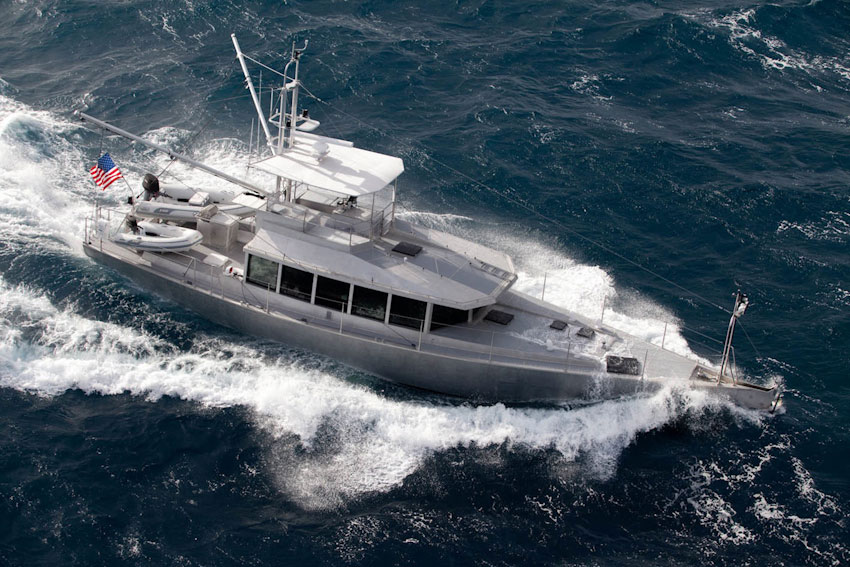
This is the story of everyday folks, who dreamed of distant horizons and made it happen. If you look at our FPB 64 owners, they are a normal group of yachties who started without ocean crossing experience, who have turned themselves into true voyagers. How did they do it? Why did they do it? What is it that makes it possible for them to accomplish what other people only dream about? Why are they out there doing it while most yacht owners sit in a marina? [Read the rest »]
Why FPB? The Concept Explained…

We’ve been chasing the holy grail of the perfect cruising yacht for 40 years. The Deerfoot, Sundeer and Beowulf series are considered the premiere sailing yachts on which to circumnavigate. The FPB fleet is judged by the most experienced owners and journalists to be the best ocean-crossing motor yachts today. To find out why, read on:
The Black Swan Theory Of Cruising – Updated

Our approach to yacht design (as well as investing) is captured by Nassim Taleb’s black swan theory of economics. [Read the rest »]
Why FPB? Owners and Editors Talk…

In case you don’t have an FPB anchored nearby, we’ve included below some brief comments from several of our owners, as well as a couple of hard-nosed magazine editors. We’ll start with Bill Parlatore, the individual many credit with the start and nurturing of the ocean cruising powerboat industry. [Read the rest »]
Motor Yacht Stability, Comfort, and Safety – An Updated Compilation

When you head offshore your safety depends on stability, both upright and ultimate (the heel angle at which you don’t recover from a knockdown). Given today’s software and computing power, calculating stability is a relatively straightforward exercise. This is required for commercial vessels, larger yachts, and generally for any flag state/class certification such as MCA, RINA, ABS, etc. We would not go offshore without this data, and we don’t think you should either.
FPB: Cruising Speed, Range Under Power, And The Real World

Those of you familiar with our work will know that we consider being able to maintain comparatively fast cruising speeds the most important factor in safe, comfortable ocean crossing. Get this right and you enjoy making passages. Get it wrong and you will prefer sitting at the dock reading about the folks who are really out there cruising. [Read the rest »]
A New Paradigm for Cruising
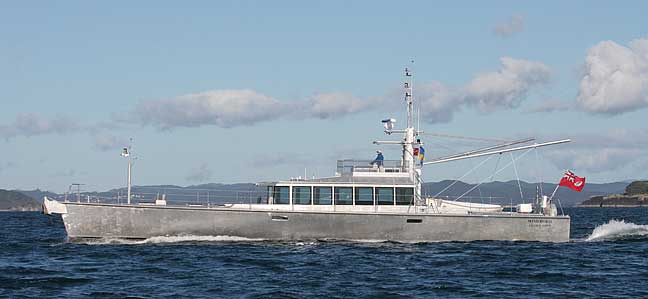
Our design goal has always been to cross oceans in maximum comfort and safety [Read the rest »]
Living With 360 Degree Views
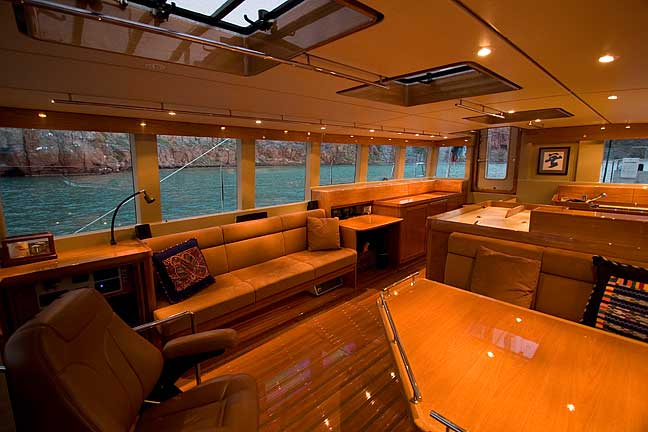
We’ve been trying to describe what it is like to have the majority of our day to day experience aboard in an area with 360-degree views. [Read the rest »]
Read more posts in this category!
Boat By Boat
FPB Video: The Way

A new video in which we reveal the secrets behind all those ocean-crossing miles… [Read the rest »]
FPB 78 The Dream Machine: Reality – Updated May 24, 2017

The Next Generation of FPBs is here, cruising even farther, faster, more comfortably and efficiently than their predecessors. With the first two FPB 78s rapidly racking up sea miles, read on to find out how, in a world full of empty claims, FPBs do what they are supposed to do.
FPB 70 – A New Baby Sister!

There’s a new kid on the block, a smaller sibling to the FPB 97 and 78, and like most younger family members, this one is as tough as nails. [Read the rest »]
FPB 97 – Code Name “Wicked”

Slicing through the barriers of what can and cannot be done with a large yacht, the Wicked FPB 97 redefines the cruising paradigm.
FPB 64 – Introduction
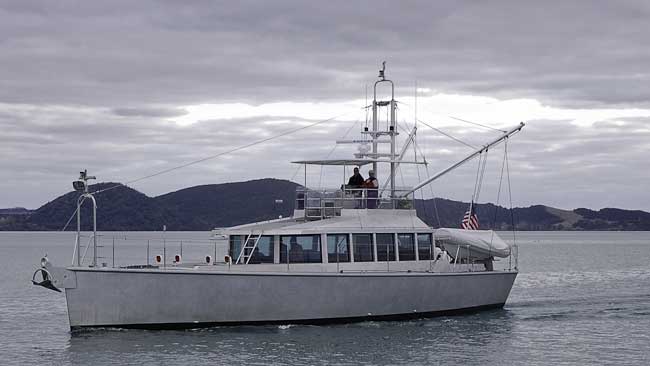
When we wrote this introduction six years ago, during the depths of a marine industry depression, we had no idea that the summer of 2016 would have 11 FPB 64s in the water cruising. For all the latest FPB 64 updates, click here. [Read the rest »]
FPB 83 – Wind Horse
“…One of the coolest boats I have had the pleasure to spend time on.”
-Bill Parlatore, Passagemaker Magazine

Let us take you on a tour of the FPB prototype, Wind Horse.
Read more posts in this category!
The Logs
Steve Dashew on Designing from Experience
(October 8th, 2026)
How thousands of miles at sea shaped a radically practical approach to yacht design.
From fast multihulls and hard-earned cruising experience to Deerfoot, Sundeer and FPB, Steve Dashew explains why the best design decisions often begin with living aboard the boat.
– BuzzSprout
– Spotify
– Apple
– YouTube
– iHeart (US Only)
There is a considerable difference between designing a yacht that works on paper and designing one you intend to take across an ocean.
For Steve Dashew, becoming a yacht designer was not the result of a conventional career path. It evolved through sailing, experimentation, and thousands of miles spent discovering what worked, what didn’t, and what became deeply irritating when you had to repair it yourself.
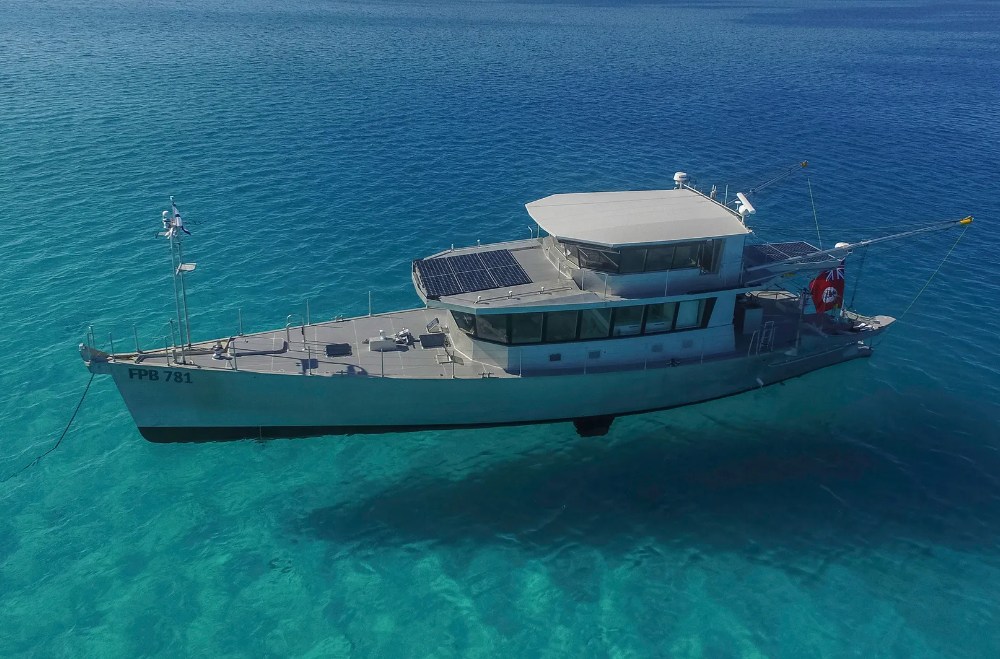
In this chapter of the Dashew Talking Books/Berthon Podcast, Steve joins Sue Grant to trace that evolution, from high-performance multihulls to bluewater cruising yachts and eventually the FPB series.
From Going Fast to Going Cruising
Steve and Linda came to cruising with an unusual background. Their early multihulls were exceptionally light and fast, and performance was part of their sailing DNA.
Then came INTERMEZZO, a 50-foot cruising yacht with a 34-foot waterline.
Suddenly, seven knots felt painfully slow.
But INTERMEZZO provided something far more valuable than speed: experience. Cruising exposed the Dashews to heavy weather, difficult anchorages, maintenance problems and the realities of navigating long distances before GPS and modern electronics.
One particularly serious passage between Tonga and Fiji brought them dangerously close to a reef after their dead reckoning position had drifted considerably. By the time they reached New Zealand, Steve recalls that one in ten of the yachts they had crossed the Pacific alongside had failed to make it because of encounters with reefs.
Speed was no longer simply about performance.
It could be about safety.
Designing Through Experience
As the miles accumulated, so did the conversations about the mythical “next boat.”
Hull material, engine rooms, refrigeration, ground tackle, accommodation and maintenance were all discussed. The ideas that emerged would eventually begin to shape the Deerfoot philosophy.
Initially, Steve worked with established designers to produce line drawings while concentrating on the concept, specification and systems. But he increasingly found himself questioning accepted practice.
The problem was simple: many decisions were being made by people who had never had to live with their consequences. Steve had. That changed his priorities.
“Everything is related to everything else, and nothing is for free.”
Move a component and it affects weight. Change the refrigeration and it affects batteries and wiring. Alter the interior and suddenly access to another system disappears.
For Steve, yacht design became less about individual components and more about understanding the entire boat as one interconnected system.
Design It Now, Fix It Later
Maintenance became particularly important.
When specifying the Sundeer 64, Steve insisted that refrigeration tubing run through a 50mm PVC conduit. The yard questioned why they should bother with a detail that appeared to offer no immediate benefit.
Steve was thinking seven or eight years ahead.
When that pipework eventually required replacement, the conduit could turn what might have been days of dismantling into a relatively straightforward job.
That thinking runs throughout the Dashew designs: design and build, rather than build and design.
Reliability and access became fundamental because a cruising yacht needed to remain maintainable thousands of miles from the people who built it.
Becoming the Designer
By the mid-1980s, computer technology allowed Steve to take another step.
The Deerfoot 61 became the first yacht for which he drew the complete hull shape himself. The technology was primitive and expensive by modern standards, but it removed the need to rely on somebody else to turn his ideas into lines.
As the technology improved, the designs became increasingly detailed. Eventually, Steve could virtually assemble almost an entire yacht before construction began, considering machinery, plumbing, wiring, structure and maintenance access together.
That process reached another level with WIND HORSE, the first FPB.
Steve recalls working from around 6:30 in the morning until nine or ten at night, often barely leaving his office as he worked through the enormous number of interconnected decisions involved in creating something so far removed from conventional offshore motor yachts.
Living With the Product
Perhaps the most important part came after the drawings were finished.
Steve and Linda actually went cruising.
They sailed their yachts across oceans, maintained them, repaired them and discovered which decisions had worked. With WIND HORSE, they went on to cover around 60,000 nautical miles.
That experience then fed directly into whatever came next.
It is perhaps the simplest explanation of the Dashew approach to yacht design:
“The way that you get trained in how to make the right decisions is by living with your product.”
Not simply designing a yacht.
Not simply building one.
But taking it to sea, living with every decision, discovering what you got wrong and carrying those lessons into the next boat.
Listen to the Full Episode
– BuzzSprout
– Spotify
– Apple
– YouTube
– iHeart (US Only)
How a Boatbuilder Accidentally Created America’s Roadside Giants
(August 6th, 2026)
– BuzzSprout
– Spotify
– Apple
– YouTube
– iHeart (US Only)
The remarkable story behind Steve Dashew, the Muffler Men and one of the most unlikely chapters in American advertising
Long before Steve Dashew became known for designing some of the world’s most capable offshore cruising yachts, he was solving a very different problem.
It wasn’t about heavy weather, passagemaking or offshore design. It was simply about surviving the winter.
In the early 1960s, Steve was running a small boatbuilding business in California. Like many seasonal businesses, work slowed dramatically once summer ended. Rather than accepting months of quiet, he began searching for something that would keep his small team employed through the winter.
That search led to a tiny classified advert in the Los Angeles Times.
It was advertising the sale of a small fibreglass display business complete with a handful of moulds, including a giant Paul Bunyan figure.
Steve bought it.
As he recalls in the latest episode of the Dashew Talking Books, “This started like most things we’ve been involved with… we never intended it to be in the display business.”
A Giant Opportunity
At first, the business was little more than a winter sideline.
The moulds produced oversized fibreglass figures that could be assembled, painted and installed outside businesses. They were eye-catching, unusual and unlike almost anything motorists had seen before.
Then everything changed.
One of the first Paul Bunyan figures was installed outside a service station in Las Vegas. Almost overnight, fuel sales reportedly doubled.
The success attracted attention throughout the petroleum industry, eventually leading to enquiries from some of America’s largest companies.
For a young entrepreneur in his early twenties, it was an extraordinary opportunity.
“I had no fear,” Steve says. “I didn’t know what you couldn’t do.”
Armed with little more than presentation boards, confidence and an idea that clearly worked, he found himself pitching directly to senior marketing executives at Texaco, Phillips 66, Sinclair and Uniroyal.
The Birth of the Muffler Men
As demand grew, so did the range of characters.
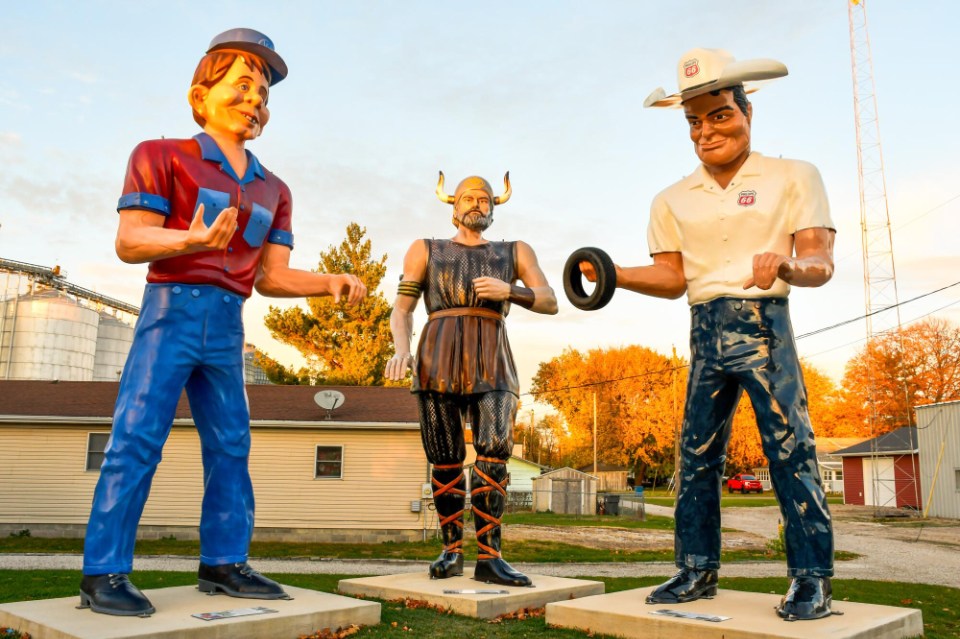
The original Paul Bunyan evolved into cowboys, Native American figures, pirates, restaurant mascots and service station attendants.
There were giant dinosaurs, oversized animals and eventually the famous Uniroyal Gal, created for the tyre manufacturer’s nationwide advertising campaign.
Many of the figures shared the same basic mould, cleverly adapted with different heads, clothing and accessories to suit each customer.
Today they are collectively known as the Muffler Men, towering roadside figures that became synonymous with American highways during the 1960s and early 1970s.
At the time, however, they were simply innovative advertising.
Businesses wanted something motorists couldn’t ignore.
Steve’s giants delivered exactly that.
Bigger Than Advertising
Success came quickly.
What began as a seasonal side project grew into a nationwide manufacturing business, producing hundreds of giant figures for major corporations and independent businesses alike.
Steve even designed a patented trailer system that allowed the enormous statues to be transported and erected more efficiently, solving one of the biggest logistical challenges facing the growing business.
Looking back, he remembers those years with obvious affection.
“I had no idea what a wonderful business we had,” he reflects.
It wasn’t simply about manufacturing fibreglass figures.
It was about creating something memorable enough that people would stop, look and, most importantly, pull into the business they were advertising.
Long before the internet, social media or digital marketing, these towering roadside giants became some of America’s most successful attention-grabbers.
An Unexpected Legacy
Like many industries, roadside advertising evolved.
Changing tastes and new marketing methods gradually reduced demand, and Steve eventually left the business behind before embarking on the next stage of his career.
That next chapter would ultimately lead him back to boats, where his innovative thinking would influence generations of offshore cruising yachts.
Ironically, the giant figures he once considered little more than commercial displays have since become treasured pieces of Americana.
Many have been carefully restored. Others have found homes in museums or become beloved Route 66 landmarks. Collectors and preservationists now dedicate countless hours to tracking, restoring and celebrating these remarkable fibreglass giants.
What began as a practical solution to keeping a small boatyard busy during winter has become a lasting part of American roadside history.
Listen to the Full Episode
The latest episode of the Dashew Talking Books explores this fascinating and often overlooked chapter of Steve Dashew’s life in far greater detail.
From giant Paul Bunyans and Uniroyal Gals to Texaco campaigns, Route 66 landmarks and unexpected entrepreneurial success, it’s a story that’s every bit as remarkable as the offshore adventures Steve is best known for.
– BuzzSprout
– Spotify
– Apple
– YouTube
– iHeart (US Only)
Heavy Weather: How FPB 83 WIND HORSE Changed Offshore Powerboat Design
(July 29th, 2026)
A Conversation with Steve Dashew
– BuzzSprout
– Spotify
– Apple
– YouTube
– iHeart (US Only)
“When you start attracting the attention of the professionals in a country like New Zealand, you know you’re onto something.”
Some boats are built to answer a question.
Others end up creating an entirely new category.
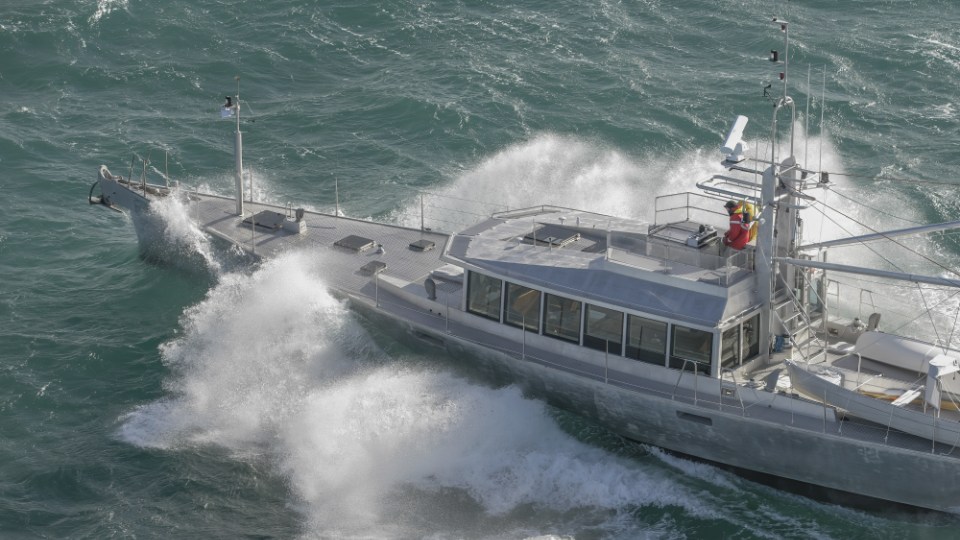
In our latest podcast episode, Sue Grant sits down with renowned yacht designer, sailor and author Steve Dashew to discuss FPB 83 WIND HORSE, the yacht that would ultimately become the foundation of the FPB fleet and help reshape thinking around offshore powerboat design.
The story begins long before WIND HORSE entered the water.
By the early 2000s, Steve and Linda Dashew had already spent decades designing, building and operating some of the most capable offshore sailing yachts afloat. Their final sailing yacht, BEOWULF, was a highly advanced 78-foot water-ballasted ketch capable of remarkable offshore performance.
Yet a significant rig failure forced them to step back and reassess.
As Steve explains during the podcast, they realised that if they embarked on another major sailing yacht project, they would be well into their sixties before the boat was completed. At that point, they began to consider an alternative.
“If we sold BEOWULF, we’d be in our early 60s by the time we got a new boat in the water.”
The answer was not another sailing yacht.
It was a powerboat.
Challenging Conventional Thinking
The idea was far from universally accepted.
In fact, Steve recalls that many experienced voices within the industry believed the concept simply wouldn’t work.
“Everybody said we were nuts.”
The challenge was straightforward in theory but incredibly difficult in practice.
Could a powerboat be designed specifically for long-range offshore passagemaking? Could it be efficient? Could it be comfortable? And perhaps most importantly, could it cope with heavy weather?
For Steve, this final question became the defining test.
“We knew that the bottom line was how comfortable they would be at sea and how they’d handle heavy weather.”
The Search for Heavy Weather
Many yacht owners spend considerable effort avoiding difficult conditions.
WIND HORSE was different.
While no sensible skipper actively seeks danger, Steve understood that the only way to properly evaluate the concept was to expose the yacht to challenging offshore conditions and see how she behaved.
As he explains during the conversation, design calculations and computer modelling can only take you so far.
“You really don’t know until you get the boat in the water in a confused sea state.”
That opportunity arrived during early offshore passages from New Zealand.
One particular experience remains especially memorable.
Steve describes encountering multiple crossing wave systems – conditions that often prove more uncomfortable than a single large swell.
“The seas from one direction aren’t what get you in trouble or make you uncomfortable. It’s when you get a crossing sea state, or sometimes two or three seas crossing.”
What happened next fundamentally changed his view of offshore cruising.
A Different Kind of Offshore Experience
For decades, Steve had sailed large offshore yachts.
Heavy weather meant sail changes, reefing decisions, watch systems and constant attention.
Aboard WIND HORSE, he encountered something entirely different.
“It was the most astonishing feeling when we went through that first squall, and we realised, there’s nothing to do.”
The statement sounds almost simple, but its significance is profound.
Removing the complexity of sail handling fundamentally altered the experience of offshore passagemaking. The crew remained focused, alert and engaged, but much of the physical and mental workload associated with traditional offshore sailing simply disappeared.
Looking back, Steve admits:
“I had never realised up to that point how stressful it was the way we sailed BEOWULF.”
Learning from Experience
One recurring theme throughout the conversation is the importance of practical experience.
Despite advances in modelling software, CFD analysis and modern naval architecture, Steve repeatedly returns to the idea that offshore conditions remain the ultimate proving ground.
Theoretical performance matters.
Real-world performance matters more.
“The final decisions are always made by feel.”
It is a philosophy that extends beyond hull design and into every aspect of yacht ownership.
The discussion touches on reliability, maintenance and accessibility, with Steve arguing that many problems are prevented simply by being able to inspect systems properly.
“If you have good access, then you can check things.”
The Birth of the FPB Fleet
Perhaps the most surprising part of the story is that WIND HORSE was never intended to launch a production fleet.
Steve believed the project would be the final boat he built.
“When we built WIND HORSE, we thought that was the last boat.”
The market had other ideas.
Interest arrived almost immediately.
“A few weeks later, we had deposit checks for four boats.”
From that point, the FPB story began in earnest.
What started as a personal experiment became a fleet of offshore cruising yachts that would influence yacht designers, builders and owners around the world.
Listen to the Full Episode
This conversation with Steve Dashew offers a fascinating insight into the thinking behind FPB 83 WIND HORSE, the realities of heavy weather offshore, and the lessons learned from decades of passagemaking.
For anyone interested in offshore cruising, yacht design, seamanship or the origins of the FPB fleet, it is an episode not to be missed.
– BuzzSprout
– Spotify
– Apple
– YouTube
– iHeart (US Only)
FPB Announcement
(November 5th, 2020)
Hello Setsailors,
A brief heads up regarding FB 78-1 Cochise:
Cochise is headed towards Europe under new ownership. Although she was not for sale, when Sue Grant at Berthon International introduced us to her new owners it was obvious Cochise would be in good hands and used in a manner that takes advantage of her design.
Cochise treated us amazingly well, keeping us safe and comfortable over many thousands of miles. We wish her new owners the very best with their dream machine.
Making the Modern Integrated Nav System Easier to Use
(August 19th, 2020)
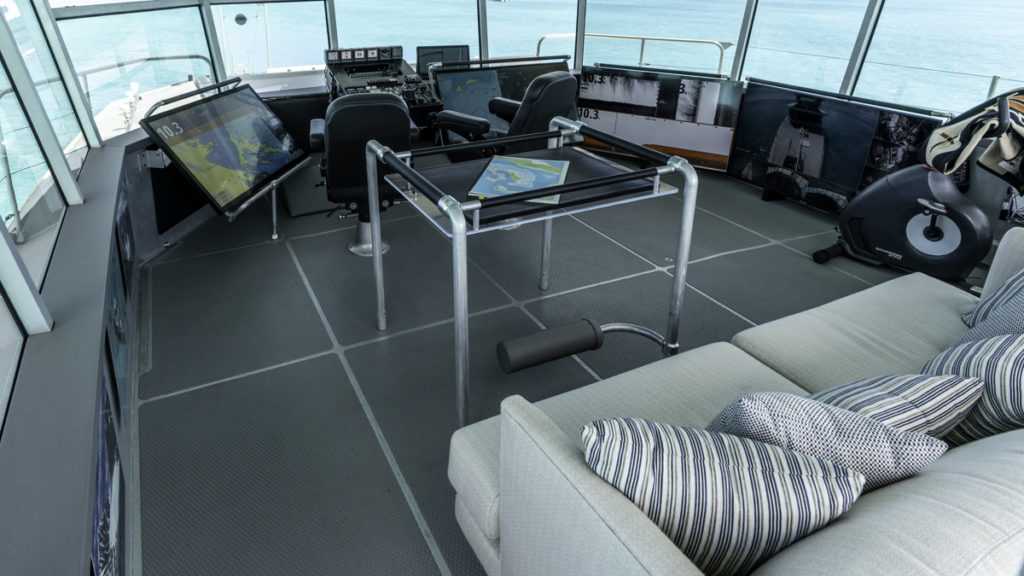
Join Steve Dashew aboard FPB 78-1 Cochise and find out how the Dashews solved one of the major weaknesses of modern integrated navigation systems.
Making It Happen & Free Book Offer
(March 27th, 2020)

The Antarctic Way – Redefining What’s Possible – Life Changing Adventures Aboard FPB 78s
(March 3rd, 2020)
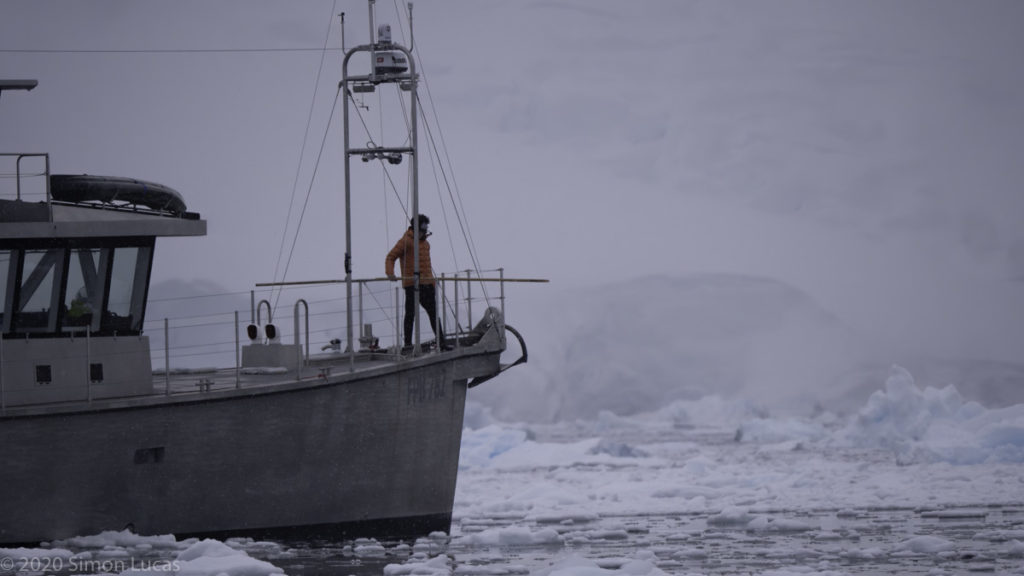 … beautifully filmed, powerful video follows the journey of two FPB 78s as they cruise the remote and challenging Lemaire channel of Antarctica. [Read the rest »]
Fiji to Panama – 7500 Miles – One Stop – New Video
(February 18th, 2020)

Join Linda and Steve Dashew aboard the FPB 78 – 1 Cochise on a 7500 mile/12,070 kilometer record setting voyage, [Read the rest »]
The Nature of Lightning – Avoidance, Protection, and Recovery Video
(February 5th, 2020)
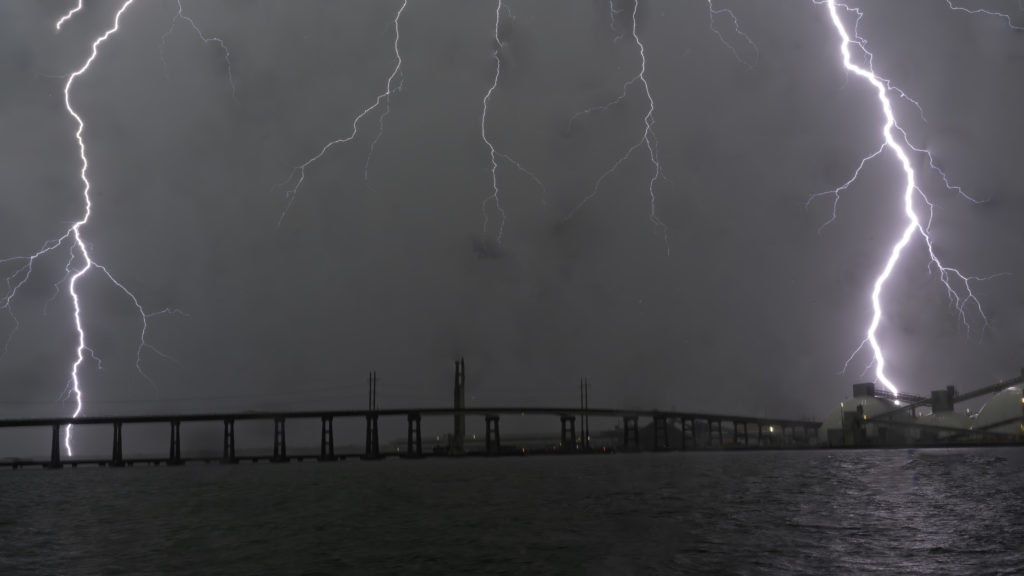
Although we have never been hit with lightning, it is one of the few things about which we worry when at sea, in particular with modern yachts. Hence this new vide0. [Read the rest »]
The Way to Weather: Upwind Cruising from Fair to Survival Conditions
(January 28th, 2020)

This is the third video in Steve Dashew’s series on his search for the perfect cruising yacht. [Read the rest »]