The Logs

The Logs

Building the Dashew Boats

From California to New Zealand, Steve Dashew looks back at the shipyards, craftsmen, currencies and hard-earned lessons behind decades of Deerfoot, Sundeer and FPB designs.

“If you want to make a small fortune in the boat business, start with a large one.”

– BuzzSprout
– Spotify
– Apple
– YouTube
– iHeart (US Only)
building-the-dashew-boats-4

Building the Dashew Boats: Shipyards, Craftsmen and Lessons Learned

From California to New Zealand, Steve Dashew looks back at the yards, craftsmen, currencies and hard-earned lessons behind decades of Dashew designs.

“If you want to make a small fortune in the boat business, start with a large one.”

After more than six decades around boatbuilding, Steve Dashew has earned the right to make the joke.

The Dashew story is usually told through the boats: the experimental Beowulf multihulls, Deerfoot and Sundeer sailing yachts, the extraordinary BEOWULF and, eventually, WIND HORSE and the FPB series.

But every one of those boats had to be built somewhere.

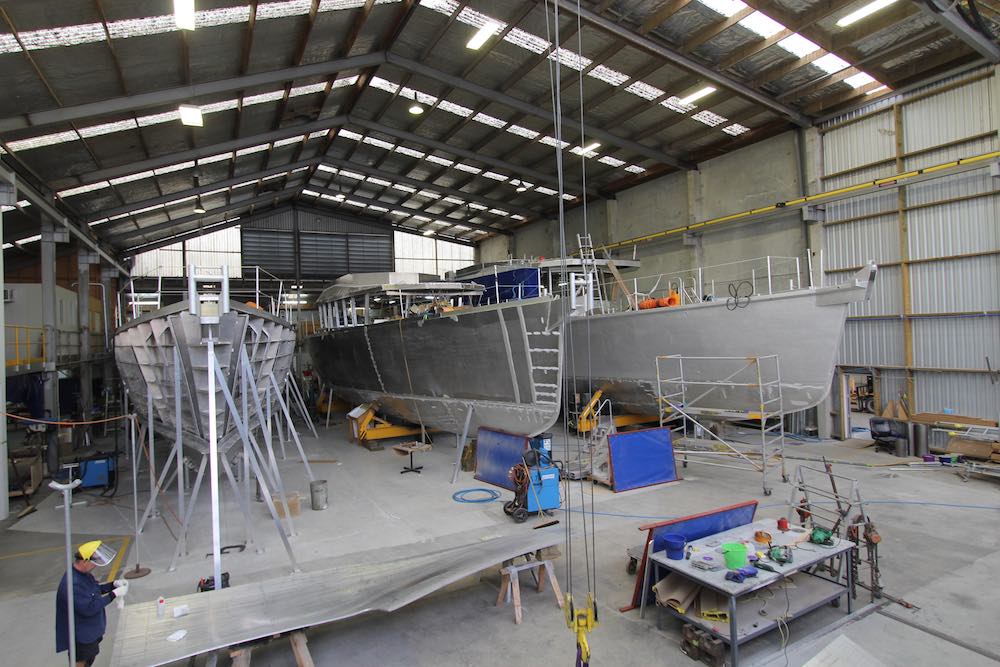
In this chapter of the Dashew Talking Books, Steve joins Sue Grant to trace the shipyards, builders and craftsmen behind those designs. It is a story stretching from California to New Zealand, South Africa, Denmark and Finland, shaped as much by exchange rates and individual relationships as drawings and specifications.

From a Wildcat to 18,000 Hobies

Steve’s first experience with a boatyard came in California in the late 1950s, working with Dan Sanderson and Roy Hickok at S&H Boatyard in Costa Mesa.

At the time, Steve was sailing a Thistle and regarded the new catamarans with suspicion. Then he watched a Wildcat comprehensively outperform the conventional dinghies in a Newport Beach regatta.

A test sail changed things rather quickly.

That relationship led Steve into the factory racing team and began an extraordinarily experimental period. There was the 14-foot Incomparable Eliminator, Steve’s attempt to shrink the spectacular V8-powered SK racing boats of the Colorado River into an affordable outboard. Around 350 were eventually built, although Steve remembers the first as “an absolute disaster”.

Then came the C-Class Beowulfs and some fairly uncomplicated engineering methodology:

“If something broke, we made it a little bit heavier and if something didn’t break, then we made it a little bit lighter.”

In 1974, Steve was asked to develop another catamaran. The factory produced three prototypes from his drawings, experimenting with different rigs, daggerboards and rudders while retaining Steve’s hull shape.

The result was the Hobie 18. Steve’s historical research for the podcast found a figure of approximately 18,000 boats, prompting the inevitable reflection that perhaps his design fee should have been higher.

New Zealand: Salthouse and Kelly Archer

By the late 1970s, the projects were getting considerably bigger.

One of the most important lessons Steve had learned was that choosing where to build wasn’t simply about finding the most famous yard. Economics mattered enormously.

He developed what he called his “boatyard index”, comparing skilled labour costs around the world. During the Reagan-era dollar, Steve recalls paying roughly US$8–11 an hour for European craftsmanship equivalent to work costing around US$35 an hour at Palmer Johnson in America.

“That was the chief driver.”

Currency helped lead the Dashews to Salthouse Brothers in Auckland, an old family yard where a young Kelly Archer would become one of the most important craftsmen in their boatbuilding story.

Salthouse worked on a substantial list of Dashew yachts, including the 68-foot Deerfoot cutter, 72-foot ketch Wakaroa, 68-foot Sundeer, Deerfoot 61s and a Deerfoot 63.

Archer became so important that the contract for the first two boats stipulated that he work exclusively on the Dashew projects.

And his eye for detail produced one particularly important discovery.

A calculation error meant one yacht was going to float significantly away from her intended lines. Correcting the problem led to moving machinery aft and, inadvertently, helped create the separated aft engine-room arrangement that became such a notable feature of subsequent boats.

“It wasn’t planning on our part. It was correcting a mistake, which turned out to be a brilliant correction.”

South Africa: Building for Half the Budget

Currency then moved the story again.

While cruising through Mauritius, Steve began investigating the possibility of building a hard-chine metal yacht. He was told the steel would be cheaper in South Africa, which led to conversations there about setting up an export operation.

The South African Reserve Bank operated a system involving the financial rand, through which an approved export project could effectively buy local currency at around a 40% discount. The Dashews applied. They were approved. The economics changed dramatically.

Steve recalls ultimately building for a little under half the original budget. Cen Marine in Cape Town produced work on two Deerfoot 62 projects, while Steve and his team also trained local workers in their methods.

It is a recurring theme throughout the episode: the location of a boatyard was not incidental to the design programme. Currency, labour, available skills and local industry could determine whether an idea was financially possible at all.

Denmark and Finland

Europe brought another collection of builders.

In Denmark, Steve encountered the Oeland brothers, craftsmen with low overheads, good equipment and a refreshingly direct way of working. They built three 72-foot motorsailers: Deerfoot II, Interlude and Maya.

Steve remembers them simply as: “Wonderful craftsmen and a real pleasure to work with.”

Fit-out work took the Dashews to Walsteds in Svendborg, a family yard already carrying an exceptional reputation. Rod Stephens of Sparkman & Stephens told Steve it was one of his favourite yards in the world.

Walsteds fitted out the three 72-footers and also built and fitted a Deerfoot 58. Steve remembers the quality as superb, although one sea trial to Copenhagen also left him remembering just how cold Denmark could be when you had arrived without suitable clothes.

In Finland, Scandi Yachts became another important part of the story, building four 62-foot yachts after Steve encountered the work of Niise Louma and his team. Louma had previously been involved with Swan and was among the group that went on to establish Baltic Yachts.

California and a 72-Foot Downwind Flyer

Back in California came LOCURA, a 72-foot cruising ketch built by Dennis Choate.

Steve describes Choate as: “Probably the best fibreglass builder I’ve ever worked with.”

The hull was light, strong and built quickly. LOCURA was deliberately optimised for downwind sailing, and Steve recalls footage of her averaging around 14 knots while her owner steered with his feet.

She was less enthusiastic about going to windward, but that was part of the brief.

Years later, Steve understood that LOCURA had completed around three circumnavigations under different owners.

From Sundeer to BEOWULF

Then came one of the great leaps.

Steve and Linda had struggled to persuade clients to accept an unpainted aluminium yacht, so with Sundeer they decided to prove the idea themselves.

When they eventually advertised her for sale, they received three offers at the asking price within around a month. Subsequent owners considered painting her, but the bare aluminium survived.

That sale ultimately led to a conversation with Everett Pearson and TPI.

The American luxury tax had devastated boatbuilding, and Steve remembers TPI operating with only around 20% of its normal workforce. Pearson told him that if the Dashews could secure deposits for six boats, he would begin tooling.

They returned with nine deposits in roughly six weeks.

TPI would go on to build 17 Sundeer 56/60s and 10 Sundeer 64s, according to Steve’s recollection in the episode.

Then came BEOWULF, Steve and Linda’s radical “mom and pop cruiser”. Her metalwork began in the United States before the unfinished yacht headed to New Zealand, where Kelly Archer assembled a small team of master craftsmen for the interior.

Steve describes the finished work simply as “exquisitely done.”

WIND HORSE and the FPB Era

The story eventually returned to New Zealand once again.

For WIND HORSE, Circa fabricated the hull while Kelly Archer completed the interior. Circa subsequently became central to the FPB programme, building 11 FPB 64s, the FPB 110 ICEBERG, three FPB 78s, COCHISE, GREY WOLF and IRON LADY, and two FPB 70s.

By then, decades separated the sophisticated FPBs from that first Wildcat in California.

Yet one principle had remained remarkably consistent.

The Dashews could not simply produce a design and disappear.

“We were never able to get the boats we wanted executed unless we were intimately involved with it.”

Steve travelled repeatedly to yards, worked closely with craftsmen and occasionally even added financial contingencies when he believed a builder had priced a job too cheaply to complete it properly.

Eventually, Steve and Linda reached a simple conclusion: if they weren’t prepared to remain involved, they shouldn’t keep building boats.

The People Behind the Boats

That may be the most interesting lesson from this chapter of the Dashew story.

The boats carry the Dashew name, but behind them sits a remarkable international network of people: Dan Sanderson and Roy Hickok in California; John Salthouse and Kelly Archer in New Zealand; the teams at Cen Marine in South Africa; Niise Louma and Scandi Yachts in Finland; the Oeland brothers and Walsteds in Denmark; Dennis Choate and Everett Pearson in the United States; and Circa back in New Zealand.

Different countries. Different materials. Different methods. Different currencies.

But the same relentless involvement in how the boats were actually built.

And after decades of navigating the difficult relationship between ambitious yacht designs and the businesses tasked with turning them into reality, Steve finishes with perhaps the most appropriate piece of boatbuilding wisdom of all:

“If you want to make a small fortune in the boat business, start with a large one.”

Listen to Building the Dashew Boats: Shipyards, Craftsmen and Lessons Learned with Steve Dashew, part of the Dashew Talking Books, on YouTube, Spotify and Apple Podcasts.

– BuzzSprout
– Spotify
– Apple
– YouTube
– iHeart (US Only)

Posted by Lawrence Carter  (November 16, 2026)    |    Comments (0)

Steve Dashew on Designing from Experience

How thousands of miles at sea shaped a radically practical approach to yacht design.

From fast multihulls and hard-earned cruising experience to Deerfoot, Sundeer and FPB, Steve Dashew explains why the best design decisions often begin with living aboard the boat.

– BuzzSprout
– Spotify
– Apple
– YouTube
– iHeart (US Only)
There is a considerable difference between designing a yacht that works on paper and designing one you intend to take across an ocean.

For Steve Dashew, becoming a yacht designer was not the result of a conventional career path. It evolved through sailing, experimentation, and thousands of miles spent discovering what worked, what didn’t, and what became deeply irritating when you had to repair it yourself.

In this chapter of the Dashew Talking Books/Berthon Podcast, Steve joins Sue Grant to trace that evolution, from high-performance multihulls to bluewater cruising yachts and eventually the FPB series.


designing-from-experience-4

From Going Fast to Going Cruising

Steve and Linda came to cruising with an unusual background. Their early multihulls were exceptionally light and fast, and performance was part of their sailing DNA.

Then came INTERMEZZO, a 50-foot cruising yacht with a 34-foot waterline.

Suddenly, seven knots felt painfully slow.

But INTERMEZZO provided something far more valuable than speed: experience. Cruising exposed the Dashews to heavy weather, difficult anchorages, maintenance problems and the realities of navigating long distances before GPS and modern electronics.

One particularly serious passage between Tonga and Fiji brought them dangerously close to a reef after their dead reckoning position had drifted considerably. By the time they reached New Zealand, Steve recalls that one in ten of the yachts they had crossed the Pacific alongside had failed to make it because of encounters with reefs.

Speed was no longer simply about performance.

It could be about safety.

Designing Through Experience

As the miles accumulated, so did the conversations about the mythical “next boat.”

Hull material, engine rooms, refrigeration, ground tackle, accommodation and maintenance were all discussed. The ideas that emerged would eventually begin to shape the Deerfoot philosophy.

Initially, Steve worked with established designers to produce line drawings while concentrating on the concept, specification and systems. But he increasingly found himself questioning accepted practice.

The problem was simple: many decisions were being made by people who had never had to live with their consequences. Steve had. That changed his priorities.

“Everything is related to everything else, and nothing is for free.”

Move a component and it affects weight. Change the refrigeration and it affects batteries and wiring. Alter the interior and suddenly access to another system disappears.

For Steve, yacht design became less about individual components and more about understanding the entire boat as one interconnected system.

Design It Now, Fix It Later

Maintenance became particularly important.

When specifying the Sundeer 64, Steve insisted that refrigeration tubing run through a 50mm PVC conduit. The yard questioned why they should bother with a detail that appeared to offer no immediate benefit.

Steve was thinking seven or eight years ahead.

When that pipework eventually required replacement, the conduit could turn what might have been days of dismantling into a relatively straightforward job.

That thinking runs throughout the Dashew designs: design and build, rather than build and design.

Reliability and access became fundamental because a cruising yacht needed to remain maintainable thousands of miles from the people who built it.

Becoming the Designer

By the mid-1980s, computer technology allowed Steve to take another step.

The Deerfoot 61 became the first yacht for which he drew the complete hull shape himself. The technology was primitive and expensive by modern standards, but it removed the need to rely on somebody else to turn his ideas into lines.

As the technology improved, the designs became increasingly detailed. Eventually, Steve could virtually assemble almost an entire yacht before construction began, considering machinery, plumbing, wiring, structure and maintenance access together.

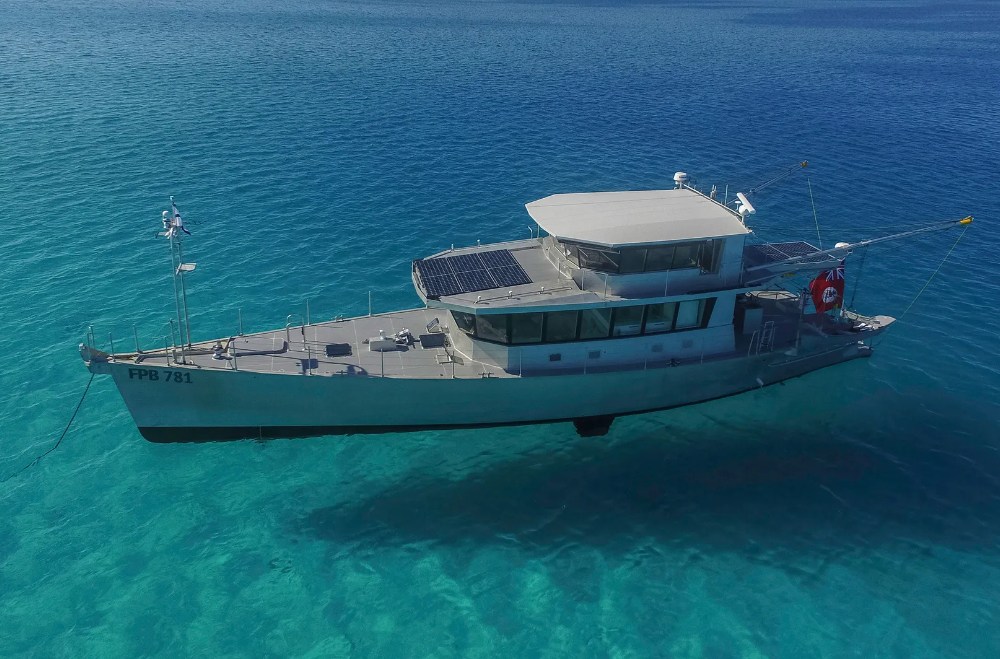
That process reached another level with WIND HORSE, the first FPB.

Steve recalls working from around 6:30 in the morning until nine or ten at night, often barely leaving his office as he worked through the enormous number of interconnected decisions involved in creating something so far removed from conventional offshore motor yachts.

Living With the Product

Perhaps the most important part came after the drawings were finished.

Steve and Linda actually went cruising.

They sailed their yachts across oceans, maintained them, repaired them and discovered which decisions had worked. With WIND HORSE, they went on to cover around 60,000 nautical miles.

That experience then fed directly into whatever came next.

It is perhaps the simplest explanation of the Dashew approach to yacht design:

“The way that you get trained in how to make the right decisions is by living with your product.”

Not simply designing a yacht.

Not simply building one.

But taking it to sea, living with every decision, discovering what you got wrong and carrying those lessons into the next boat.

Listen to the Full Episode

– BuzzSprout
– Spotify
– Apple
– YouTube
– iHeart (US Only)

Posted by Lawrence Carter  (October 8, 2026)    |    Comments (0)

How a Boatbuilder Accidentally Created America’s Roadside Giants

– BuzzSprout
– Spotify
– Apple
– YouTube
– iHeart (US Only)
The remarkable story behind Steve Dashew, the Muffler Men and one of the most unlikely chapters in American advertising

Long before Steve Dashew became known for designing some of the world’s most capable offshore cruising yachts, he was solving a very different problem.

It wasn’t about heavy weather, passagemaking or offshore design. It was simply about surviving the winter.

In the early 1960s, Steve was running a small boatbuilding business in California. Like many seasonal businesses, work slowed dramatically once summer ended. Rather than accepting months of quiet, he began searching for something that would keep his small team employed through the winter.

That search led to a tiny classified advert in the Los Angeles Times.

It was advertising the sale of a small fibreglass display business complete with a handful of moulds, including a giant Paul Bunyan figure.

Steve bought it.

As he recalls in the latest episode of the Dashew Talking Books, “This started like most things we’ve been involved with… we never intended it to be in the display business.”

the-story-behind-1

A Giant Opportunity

At first, the business was little more than a winter sideline.

The moulds produced oversized fibreglass figures that could be assembled, painted and installed outside businesses. They were eye-catching, unusual and unlike almost anything motorists had seen before.

Then everything changed.

One of the first Paul Bunyan figures was installed outside a service station in Las Vegas. Almost overnight, fuel sales reportedly doubled.

The success attracted attention throughout the petroleum industry, eventually leading to enquiries from some of America’s largest companies.

For a young entrepreneur in his early twenties, it was an extraordinary opportunity.

“I had no fear,” Steve says. “I didn’t know what you couldn’t do.”

Armed with little more than presentation boards, confidence and an idea that clearly worked, he found himself pitching directly to senior marketing executives at Texaco, Phillips 66, Sinclair and Uniroyal.

The Birth of the Muffler Men

As demand grew, so did the range of characters.

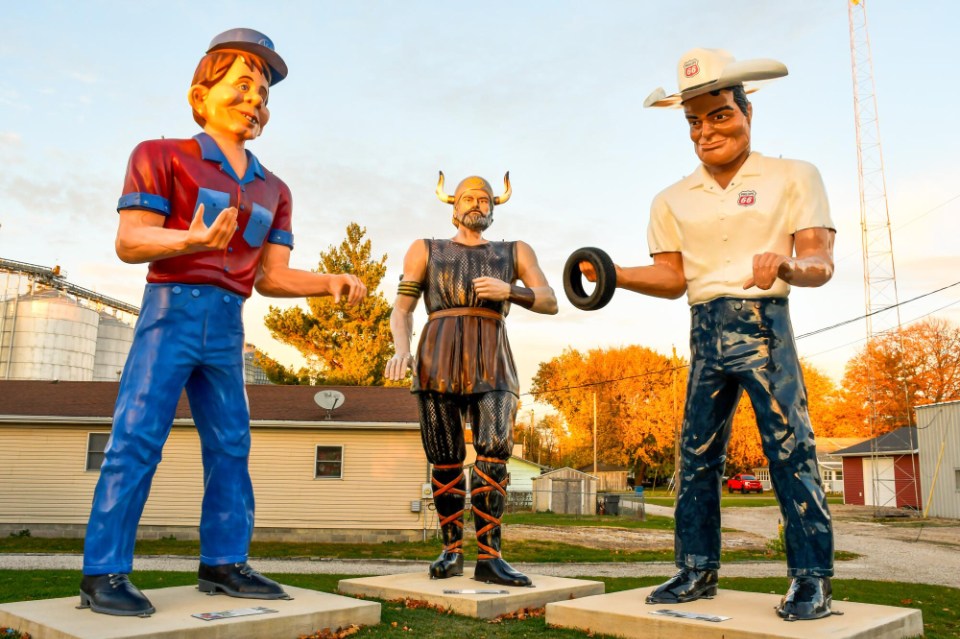
The original Paul Bunyan evolved into cowboys, Native American figures, pirates, restaurant mascots and service station attendants.

There were giant dinosaurs, oversized animals and eventually the famous Uniroyal Gal, created for the tyre manufacturer’s nationwide advertising campaign.

Many of the figures shared the same basic mould, cleverly adapted with different heads, clothing and accessories to suit each customer.

Today they are collectively known as the Muffler Men, towering roadside figures that became synonymous with American highways during the 1960s and early 1970s.

At the time, however, they were simply innovative advertising.

Businesses wanted something motorists couldn’t ignore.

Steve’s giants delivered exactly that.

Bigger Than Advertising

Success came quickly.

What began as a seasonal side project grew into a nationwide manufacturing business, producing hundreds of giant figures for major corporations and independent businesses alike.

Steve even designed a patented trailer system that allowed the enormous statues to be transported and erected more efficiently, solving one of the biggest logistical challenges facing the growing business.

Looking back, he remembers those years with obvious affection.

“I had no idea what a wonderful business we had,” he reflects.

It wasn’t simply about manufacturing fibreglass figures.

It was about creating something memorable enough that people would stop, look and, most importantly, pull into the business they were advertising.

Long before the internet, social media or digital marketing, these towering roadside giants became some of America’s most successful attention-grabbers.

An Unexpected Legacy

Like many industries, roadside advertising evolved.

Changing tastes and new marketing methods gradually reduced demand, and Steve eventually left the business behind before embarking on the next stage of his career.

That next chapter would ultimately lead him back to boats, where his innovative thinking would influence generations of offshore cruising yachts.

Ironically, the giant figures he once considered little more than commercial displays have since become treasured pieces of Americana.

Many have been carefully restored. Others have found homes in museums or become beloved Route 66 landmarks. Collectors and preservationists now dedicate countless hours to tracking, restoring and celebrating these remarkable fibreglass giants.

What began as a practical solution to keeping a small boatyard busy during winter has become a lasting part of American roadside history.

Listen to the Full Episode

The latest episode of the Dashew Talking Books explores this fascinating and often overlooked chapter of Steve Dashew’s life in far greater detail.

From giant Paul Bunyans and Uniroyal Gals to Texaco campaigns, Route 66 landmarks and unexpected entrepreneurial success, it’s a story that’s every bit as remarkable as the offshore adventures Steve is best known for.

– BuzzSprout
– Spotify
– Apple
– YouTube
– iHeart (US Only)


Posted by Lawrence Carter  (August 6, 2026)    |    Comments (0)

Heavy Weather: How FPB 83 WIND HORSE Changed Offshore Powerboat Design

A Conversation with Steve Dashew

– BuzzSprout
– Spotify
– Apple
– YouTube
– iHeart (US Only)
“When you start attracting the attention of the professionals in a country like New Zealand, you know you’re onto something.”

Some boats are built to answer a question.

Others end up creating an entirely new category.

In our latest podcast episode, Sue Grant sits down with renowned yacht designer, sailor and author Steve Dashew to discuss FPB 83 WIND HORSE, the yacht that would ultimately become the foundation of the FPB fleet and help reshape thinking around offshore powerboat design.

The story begins long before WIND HORSE entered the water.

By the early 2000s, Steve and Linda Dashew had already spent decades designing, building and operating some of the most capable offshore sailing yachts afloat. Their final sailing yacht, BEOWULF, was a highly advanced 78-foot water-ballasted ketch capable of remarkable offshore performance.

Yet a significant rig failure forced them to step back and reassess.

As Steve explains during the podcast, they realised that if they embarked on another major sailing yacht project, they would be well into their sixties before the boat was completed. At that point, they began to consider an alternative.

“If we sold BEOWULF, we’d be in our early 60s by the time we got a new boat in the water.”

The answer was not another sailing yacht.

It was a powerboat.

1-heavy-weather-how-fpb-83-wind-horse

Challenging Conventional Thinking

The idea was far from universally accepted.

In fact, Steve recalls that many experienced voices within the industry believed the concept simply wouldn’t work.

“Everybody said we were nuts.”

The challenge was straightforward in theory but incredibly difficult in practice.

Could a powerboat be designed specifically for long-range offshore passagemaking? Could it be efficient? Could it be comfortable? And perhaps most importantly, could it cope with heavy weather?

For Steve, this final question became the defining test.

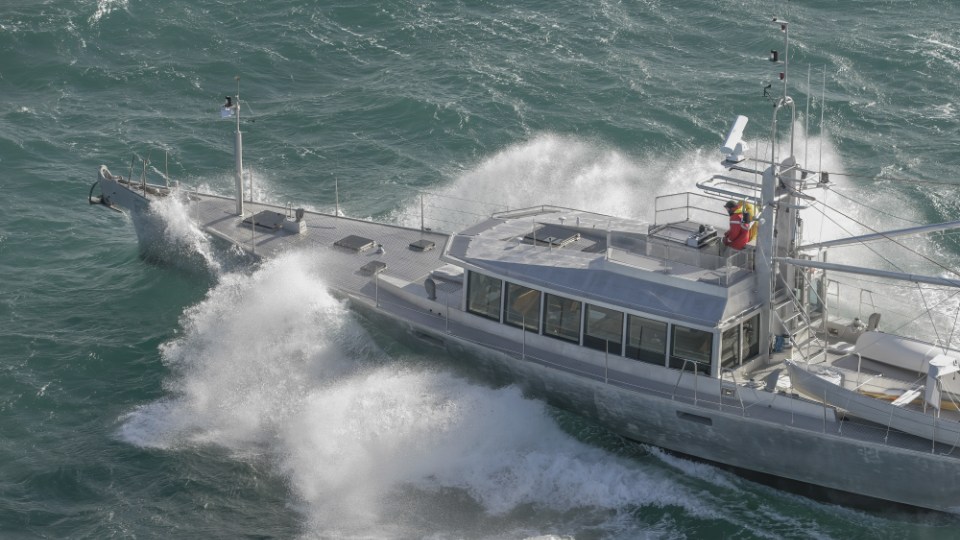
“We knew that the bottom line was how comfortable they would be at sea and how they’d handle heavy weather.”

The Search for Heavy Weather

Many yacht owners spend considerable effort avoiding difficult conditions.

WIND HORSE was different.

While no sensible skipper actively seeks danger, Steve understood that the only way to properly evaluate the concept was to expose the yacht to challenging offshore conditions and see how she behaved.

As he explains during the conversation, design calculations and computer modelling can only take you so far.

“You really don’t know until you get the boat in the water in a confused sea state.”

That opportunity arrived during early offshore passages from New Zealand.

One particular experience remains especially memorable.

Steve describes encountering multiple crossing wave systems – conditions that often prove more uncomfortable than a single large swell.

“The seas from one direction aren’t what get you in trouble or make you uncomfortable. It’s when you get a crossing sea state, or sometimes two or three seas crossing.”

What happened next fundamentally changed his view of offshore cruising.

A Different Kind of Offshore Experience

For decades, Steve had sailed large offshore yachts.

Heavy weather meant sail changes, reefing decisions, watch systems and constant attention.

Aboard WIND HORSE, he encountered something entirely different.

“It was the most astonishing feeling when we went through that first squall, and we realised, there’s nothing to do.”

The statement sounds almost simple, but its significance is profound.

Removing the complexity of sail handling fundamentally altered the experience of offshore passagemaking. The crew remained focused, alert and engaged, but much of the physical and mental workload associated with traditional offshore sailing simply disappeared.

Looking back, Steve admits:

“I had never realised up to that point how stressful it was the way we sailed BEOWULF.”

Learning from Experience

One recurring theme throughout the conversation is the importance of practical experience.

Despite advances in modelling software, CFD analysis and modern naval architecture, Steve repeatedly returns to the idea that offshore conditions remain the ultimate proving ground.

Theoretical performance matters.

Real-world performance matters more.

“The final decisions are always made by feel.”

It is a philosophy that extends beyond hull design and into every aspect of yacht ownership.

The discussion touches on reliability, maintenance and accessibility, with Steve arguing that many problems are prevented simply by being able to inspect systems properly.

“If you have good access, then you can check things.”

The Birth of the FPB Fleet

Perhaps the most surprising part of the story is that WIND HORSE was never intended to launch a production fleet.

Steve believed the project would be the final boat he built.

“When we built WIND HORSE, we thought that was the last boat.”

The market had other ideas.

Interest arrived almost immediately.

“A few weeks later, we had deposit checks for four boats.”

From that point, the FPB story began in earnest.

What started as a personal experiment became a fleet of offshore cruising yachts that would influence yacht designers, builders and owners around the world.

Listen to the Full Episode

This conversation with Steve Dashew offers a fascinating insight into the thinking behind FPB 83 WIND HORSE, the realities of heavy weather offshore, and the lessons learned from decades of passagemaking.

For anyone interested in offshore cruising, yacht design, seamanship or the origins of the FPB fleet, it is an episode not to be missed.

– BuzzSprout
– Spotify
– Apple
– YouTube
– iHeart (US Only)


Posted by Lawrence Carter  (July 29, 2026)    |    Comments (0)

FPB Announcement

Hello Setsailors,

A brief heads up regarding FB 78-1 Cochise:

Cochise is headed towards Europe under new ownership. Although she was not for sale, when Sue Grant at Berthon International introduced us to her new owners it was obvious Cochise would be in good hands and used in a manner that takes advantage of her design.

Cochise treated us amazingly well, keeping us safe and comfortable over many thousands of miles. We wish her new owners the very best with their dream machine.


Posted by Steve Dashew  (November 5, 2020)    |    Comments (0)

Making the Modern Integrated Nav System Easier to Use

Join Steve Dashew aboard FPB 78-1 Cochise and find out how the Dashews solved one of the major weaknesses of modern integrated navigation systems.

Read the rest »


Posted by Steve Dashew  (August 19, 2020)    |    Comments (0)

Making It Happen & Free Book Offer

Linda and Steve Dashew’s four books now available as a free PDF download.

Read the rest »


Posted by Steve Dashew  (March 27, 2020)    |    Comments (0)

The Antarctic Way – Redefining What’s Possible – Life Changing Adventures Aboard FPB 78s

… beautifully filmed, powerful video follows the journey of two FPB 78s as they cruise the remote and challenging Lemaire channel of Antarctica. Read the rest »


Posted by Steve Dashew  (March 3, 2020)    |    Comments (0)

Fiji to Panama – 7500 Miles – One Stop – New Video

Join Linda and Steve Dashew aboard the FPB 78 – 1 Cochise on a 7500 mile/12,070 kilometer record setting voyage, Read the rest »


Posted by Steve Dashew  (February 18, 2020)    |    Comments (0)

The Nature of Lightning – Avoidance, Protection, and Recovery Video

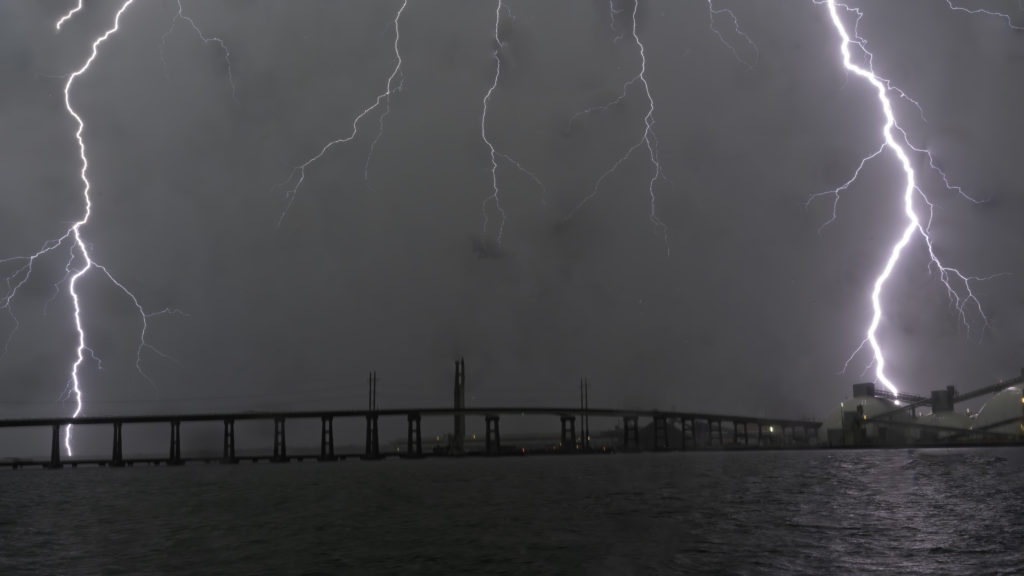
Although we have never been hit with lightning, it is one of the few things about which we worry when at sea, in particular with modern yachts. Hence this new vide0. Read the rest »


Posted by Steve Dashew  (February 5, 2020)    |    Comments (0)

The Way to Weather: Upwind Cruising from Fair to Survival Conditions

This is the third video in Steve Dashew’s series on his search for the perfect cruising yacht. Read the rest »


Posted by Steve Dashew  (January 28, 2020)    |    Comments (0)

Surfing is The Way

Having grown up in Southern California, with a sailing and surfing background, riding the waves  a natural part of being in or on the water. Our sailing and FPB designs have reflected this from the beginning. Recently we were surprised to learn that some of our owners are afraid of what is actually. one of the best things you can do with our yachts. Read the rest »


Posted by Steve Dashew  (January 3, 2020)    |    Comments (0)

Secrets of the FPB Hull Shape – A Video That Shows and Tells All

For a link to the video which show and tells it all Read the rest »


Posted by Steve Dashew  (November 3, 2019)    |    Comments (0)

FPB Greenland Cruise

Following on the success of their Antarctic cruise in company, FPB78s Iron Lady ll and Grey Wolf ll are going to do another jaunt to the ice summer of 2020, this time to nearby Greenland. Several other FPBs are planning to join, so this is a semi-official call for all FPBers to give this opportunity serious consideration. Greenland is a relative easy destination to reach for our FPBs. Having made this life-changing cruise in 2008 we offer a few comments on the route we took.

Read the rest »


Posted by Steve Dashew  (October 20, 2019)    |    Comments (0)

Doing It Right – Creating the Best Possible Cruising Yacht

How do you create the best possible cruising yacht? Read on and we’ll share our formula. Read the rest »


Posted by Steve Dashew  (October 15, 2019)    |    Comments (0)

Evolution of the FPB Super Cruiser

I spent my first six decades on earth despising powerboats and those who operated them. In my early days of sailing dinghies, powerboats would always speed up to cross ahead of us leaving a huge wave to wreak havoc with us and our compatriots. My earliest recollection of the single finger salute was from such encounters. As cruisers, if there was a “stinkpot” around they inevitably would anchor close by and then run their genset 24 hours a day. And the lack of seamanship was stunning.  Read the rest »


Posted by Steve Dashew  (October 3, 2019)    |    Comments (0)

Steering Clear of Trouble: Our Search for Cruising Perfection

We are standing at the forward end of the great room aboard FPB 78-1 Cochise. It is eerily quiet as we watch the steam gauge climb from 13 to 20 knots, linger for a moment, before peaking at 22. A fast-rising SE gale has kicked up a steep sea, now confused with a reflected crossing wave pattern as we rapidly close with the Southern entrance to New Zealand’s Bay of Islands. This 60 metric ton motor yacht is surfing under autopilot control. The seas are perfect for Cochise and she rides the better waves for several minutes at a time, at speed length ratios above 1.6. Cochise is the most recent iteration of the perfect yacht, at least for us. Aboard Cochise, and the rest of our yachts, the key design ingredient upon which all else rests is steering control. We are warm, dry, and very comfortable. 

It wasn’t always so. Read the rest »


Posted by Steve Dashew  (September 10, 2019)    |    Comments (0)

FPB 781 Cochise Solar Update Spring 2019

It is late spring in the Bahamas, water temperature is 83/85F and air that or more. Humidity often is in the 80% range. We are making water, staying comfortable with air conditioning in the evening, generally leading a carbon neutral existence. Welcome to the new world of solar panel cruising.  What follows is a bit of data and several suggestions that might help on your own vessel.

Read the rest »


Posted by Steve Dashew  (May 18, 2019)    |    Comments (0)

Cruising At Its Best In The Bahamas

For those of you who want to experience cruising at its best, if you live in Europe or the East Coast of the US, in your back yards is some of the very best cruising on this planet. We speak of the Exhumas group in the southern Bahama Islands.

Read the rest »


Posted by Steve Dashew  (May 7, 2019)    |    Comments (0)

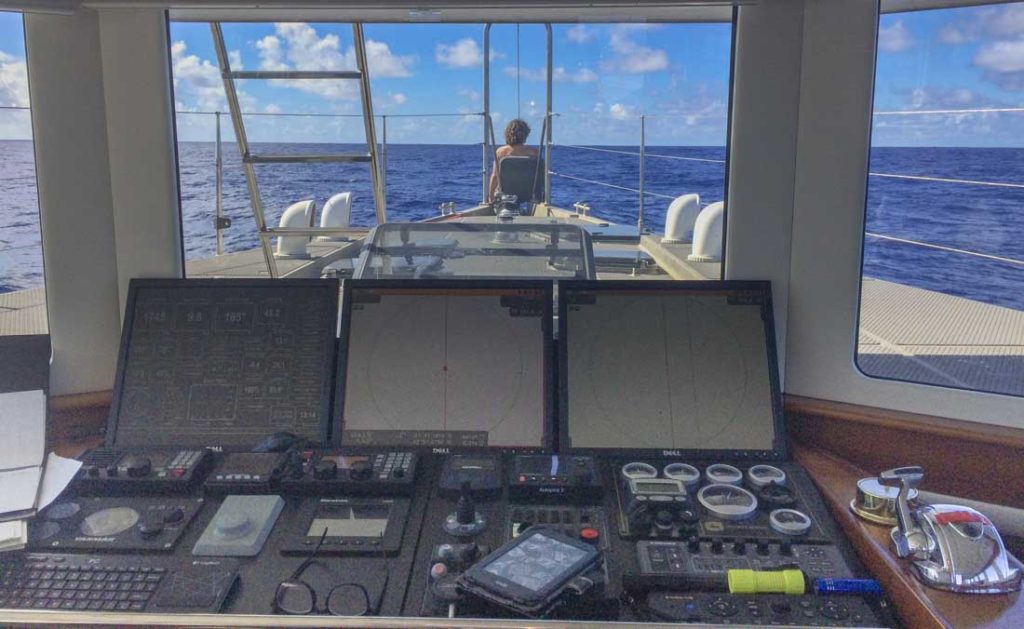
Cochise’s Final Matrix Nav Station – A Breakthrough

It is finally done (and we mean it this time)! In the post that follows we will detail the logic that lead us to to this new paradigm for navigation stations, and the details that evolved.

Read the rest »


Posted by Steve Dashew  (March 31, 2019)    |    Comments (0)

No Good Choices: A Study In Ice

Iron Lady and Grey Wolf have been cruising together in Antarctica, what the few truly experienced high latitude sailors will tell you is the toughest place on earth. These waters are more difficult and dangerous than Svalbard; the Northwest Passage is a cakewalk compared to this. And summer 2019 has been even more challenging than the recent past. In Pete Rossin’s post below you will catch a small sense of what it is like when there are simply no good choices. The photo above looks tame enough but think about it in 65 knots of breeze with eight to ten foot seas, and a glacier at your back.

Read the rest »


Posted by Steve Dashew  (February 12, 2019)    |    Comments (0)

FPB 78-2 & FPB 78-3, Where Are You? -Updated Feb 12

FPB 78-2 Grey Wolf and FPB 78-3 Iron Lady are currently having a fun summer buddy boating in Antarctica… Read the rest »


Posted by Steve Dashew  (January 29, 2019)    |    Comments (0)

FPB 78-2 and 78-3: Ready for the Antarctic Cruising Rally (Updated with Reports Jan 24)

Grey Wolf and Iron Lady are enjoying the bustling Chilean metropolis of Puerto Williams. They are preparing for the FPB ARC: Antarctic Cruising Rally.

Read the rest »


Posted by Steve Dashew  (January 18, 2019)    |    Comments (0)

Grey Wolf II

Sue Grant at Berthon is running a series of posts written by the Berthon apprentices who are aboard FPB78-2 Grey Wolf II. They are both informative and entertaining, and cover their experiences right down to the bottom of South America, and eventually to the Antarctic where Grey Wolf II is at this moment. To read about these intrepid apprentices click here.


Posted by admin  (January 9, 2019)    |    Comments (0)

FPB 64-6: How To Make A Winter Crossing of the Atlantic In A Difficult Year


FPB 64-6 has just completed a winter crossing of the North Atlantic, which at one point featured hurricane strength compression storms in east and west regions. She did so in classic fashion, taking advantage of the weather when possible, but always with a bailout option if the forecasts turned negative. There are a number of lessons for us in this passage. Read the rest »


Posted by Steve Dashew  (January 2, 2019)    |    Comments (0)

FPB 70-1: Breaking In Buffalo Nickel II

Stan and Valerie Creighton, proud owners of FPB 70-1 Buffalo Nickel II, have a brand new post published on their site about the trials, tribulations and triumphs of breaking in a new boat.  Read the rest »


Posted by admin  (December 22, 2018)    |    Comments (0)

Ground Tackle Logic: FPB 78-2 Grey Wolf ll Makes A Statement


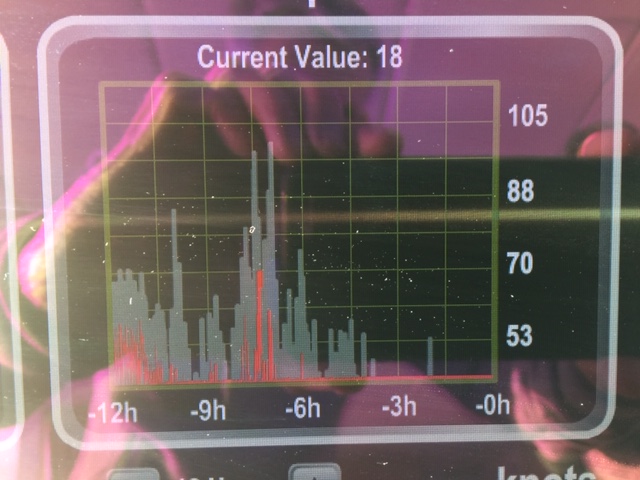
With all the engineering tools at our disposal we still use gut instinct, based on years of experience, to size ground tackle systems. The wind speed graph above provides a glimpse at one end of the benefit spectrum. Grey Wolf II is cruising in Tierra del Fuego at the bottom of the world, and recently experienced wind gusts in excess of 100 knots, more than 116 mph, at anchor.

Read the rest »


Posted by Steve Dashew  (December 13, 2018)    |    Comments (0)

Old Friends

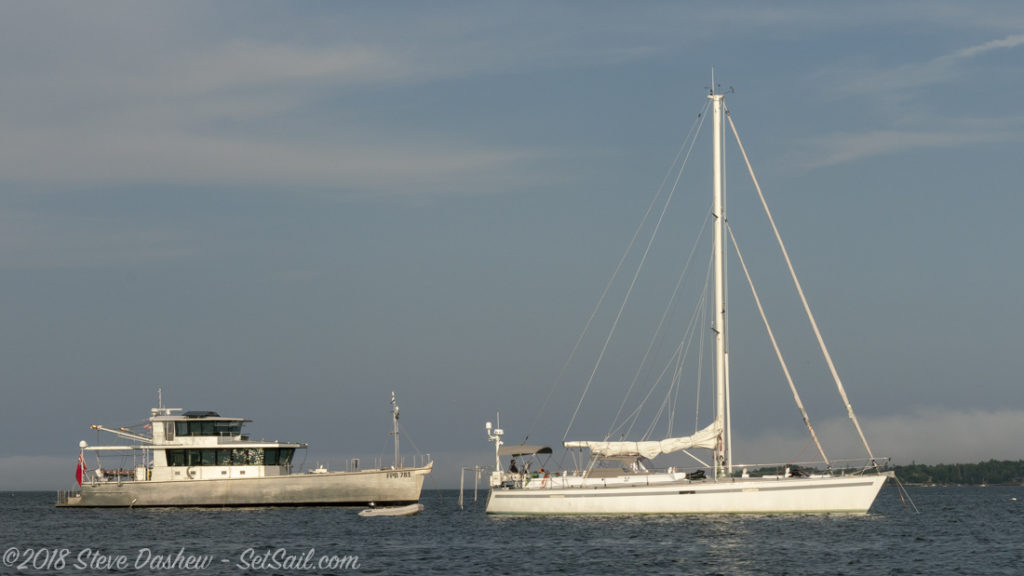
There is nothing we enjoy more when cruising than meeting up with our designs and their owners. This past summer in Maine was great fun in this regard.  Read the rest »


Posted by Steve Dashew  (November 28, 2018)    |    Comments (0)

Simrad Forward Looking Sonar-A Winner

With Simrad’s recent update, their forward-looking sonar has become a valuable tool, in particular when used in conjunction with their structure scan. The FLS is giving us an indication of the bottom coming up 350 feet ahead of us.

Read the rest »


Posted by Steve Dashew  (November 7, 2018)    |    Comments (0)

Sony 100-400 G Master with A9 Body Tracking

There are a lot of Canon and Nikon shooters wondering if Sony has gotten competitive on focus tracking. The following series were shot in Pulpit Harbor, Maine while driving the dinghy and watching the depthfinder. Read the rest »


Posted by Steve Dashew  (November 2, 2018)    |    Comments (0)

Grid and Bear It: The Joys of Drying Out

Before there were Travelifts, before there were marine railways, and even before drydocks, mariners concerned with performance used tidal grids for periodic maintenance. Read the rest »


Posted by Steve Dashew  (October 19, 2018)    |    Comments (0)

FPB 70-1: Splashed & Trialing

We know readers have been eager for some FPB 70 news. With FPB 70-1 now splashed and undergoing sea trials, we thought we would share some photos with you.
Read the rest »


Posted by Steve Dashew  (October 15, 2018)    |    Comments (0)

Maine: It’s About The Light

Painters, photographers and yacht designers have been drawn to Maine for centuries. Between the light and varied subject matter, it can be a visual nirvana.

Read the rest »


Posted by Steve Dashew  (September 17, 2018)    |    Comments (0)

FPB 78-1 Cochise Tests Survival Storm Tactic In Unusual Sea State

Many years ago, while researching ultimate storm tactics for our book Surviving the Storm (free download here), it became clear to us that, whether it was Fastnet 79, Queen’s Birthday Storm, or the 1998 Sydney Hobart Race, heading into the waves is often the best tactic in severe weather.

Because our yachts surf downwind under control making quick passages, and since in all but one of the serious storms we have experienced our natural course was downwind, we’ve rarely had the chance to experiment with truly dangerous seas on the bow. And while this most recent experience is far from what we would call a survival storm, the unusual sea state did give us a chance to test several FPB specific steering and throttle techniques, along with gathering a couple of ideas for improving electronics and night lighting layout.

The notes which follow, although aimed specifically at the FPB fleet, may offer some ideas to others who find themselves in difficult seas… Read the rest »


Posted by Steve Dashew  (August 14, 2018)    |    Comments (0)

Pulpit Harbor – Slowing Down

We are re-learning about cruising, slowing down, changing priorities. Read the rest »


Posted by Steve Dashew  (July 31, 2018)    |    Comments (0)

Let The Good Times Roll: The Maine Event and Unstructured Cruising

Some of our cruising buddies, and most of our land-based friends and relatives, lead structured lives where they have a schedule and a plan. We prefer to go with the flow–letting happenstance dictate our options.  Read the rest »


Posted by Steve Dashew  (July 21, 2018)    |    Comments (0)

Matrix Deck Update: Were The Mods Worth the Cost and Time?

At a point in our lives where we want to concentrate on enjoying ourselves aboard, we just finished a long and costly rework of FPB 78-1 Cochise’s Matrix deck. The original was cut up and carted off. And then we went through a steep learning curve involving dozens of changes. Having just completed a couple of passages and done some local cruising here in Maine, we are now in a position to pass initial judgement.

Read the rest »


Posted by Steve Dashew  (July 14, 2018)    |    Comments (0)

Simrad Halo Radar – Now As Good As Any Small Yacht Radar

We have been outspoken in our critique of Simrad’s Halo radar. We felt that its ability to pick targets out of sea clutter was poor, making it dangerous to rely on. We are pleased to report now that after adding Simrad’s Velocity Track software, our Halo is working very well. Read the rest »


Posted by Steve Dashew  (June 30, 2018)    |    Comments (0)

FPB 78-1 Cochise: Now Running Air Conditioning With Solar Energy


We are anchored at Cape Lookout, North Carolina. It has been a very warm humid weekend, the type of weather that typically finds us in cooler climates. We’ve been waiting for the arrival of six new Sunpower 360 watt solar panels, the most efficient available, and very much in demand. Cory and Angela McMahon’s Triton Marine Team have just completed installation, and we are watching as the Outback Mate controller adds up the day’s power creation.

Read the rest »


Posted by Steve Dashew  (June 26, 2018)    |    Comments (0)

FPB 78-1 Cochise: Ready To Roll

We’ve been out testing Cochise, checking out the many modifications executed for us by Corey and Angela McMahon’s Triton Marine team. There is lots to bring you up to date on… Read the rest »


Posted by Steve Dashew  (June 14, 2018)    |    Comments (0)

Anchoring Systems: Refining A Tried and True Approach


We have been having an internal dialogue about the ever-critical issue of anchoring systems, and the fact is that there is nothing like a real blow with a lee shore off your stern to focus your attention on the subject. It will come as no surprise that we like to sleep well at anchor, and by traditional definition this requires substantial holding power. It’s a given that it takes weight to achieve security at anchor, but beyond this simple postulate there are a plethora of choices. What our experience has led us to evolve into may surprise you.

Read the rest »


Posted by Steve Dashew  (May 30, 2018)    |    Comments (0)

FPB History: A Look Back At The Design Cycle That Lead To These Yachts

Fifteen years ago, when we were just starting to build the FPB Series prototype Wind Horse, we put together a video on the design cycle that lead to this new design. There was detailed information on her drag and motion analysis, including tank testing, as well as the historical foundation from which her design was developed. Read the rest »


Posted by Steve Dashew  (May 15, 2018)    |    Comments (0)

A Revolutionary Approach to Navigation Layout

This dim photo, taken with available light, turns everything we thought about navigation gear layout on its head. We are in the process of revising the Matrix Deck helm on Cochise, throwing out every design approach we have employed over the past 40 years in the process.

Read the rest »


Posted by Steve Dashew  (April 27, 2018)    |    Comments (0)

FPB 97 Video: Iceberg Put Through Paces off North Carolina

FPB 97 Iceberg has been up in North Carolina, where Cory McMahon and his Triton Marine team have been fine-tuning the Wicked 97’s steering and stabilizer systems. Steve has been there as well working on FPB 78-1 Cochise, and joined in on the fun. Read the rest »


Posted by admin  (April 21, 2018)    |    Comments (0)

Life After Death Experience For Sundeer 64 Theta Volantis

When we started cruising, in the olden days, most cruisers – ourselves included – sold their home to help pay for their new life afloat. This was before GPS, which meant considerable navigation risks, and insurance, if available, was way too expensive for most. Considering that in those days roughly one out of ten yachts crossing the tropical Pacific ended up permanently parked on a reef, you can see where the experience, even when successful, would color your outlook. Read the rest »


Posted by Steve Dashew  (April 11, 2018)    |    Comments (0)

FPB 70-1: Construction Update


It’s a busy time down at Circa. FPB 70-1 is on the home stretch toward splashing. Systems, interior cabinetry, finishing welds, all happening at a rapid pace now. Read the rest »


Posted by Steve Dashew  (April 4, 2018)    |    Comments (0)

FPB Feature in CCA Chronicles

The following article by Linda and Steve Dashew appeared in Voyages, Chronicles of the Cruising Club of America, and puts the FPB 78 into a historical context. We thought you might enjoy giving it a read. Read the rest »


Posted by Steve Dashew  (March 19, 2018)    |    Comments (0)

Life In A Post-FPB World

“Quality is never an accident; it is always the result of high intention, sincere effort, intelligent direction and skillful execution; it represents the wise choice of many alternatives.”
~ William A. Foster

This is a difficult post for Linda and me to write. But events in the past few weeks together with the urging of many of our friends and clients (often one and the same) have forced the issue, starting with the William Foster quote above sent to us by one of our owners.

Read the rest »


Posted by Steve Dashew  (February 26, 2018)    |    Comments (0)

Sony A7RIII Full Frame Mirrorless Camera – Does It Live Up To The Hype?

There has been a lot of hype about the new Sony A7RIII body. Some folks are going so far as to say the tech leap is on a par with the Canon pro line upgrade ten years ago, which introduced their L-series lenses and the 1DX/5DII bodies (which we experienced). You can easily judge for yourself with one example, this first photo.

Read the rest »


Posted by Steve Dashew  (February 16, 2018)    |    Comments (0)

Optimizing for Night Vision

The older you are the more critical it is to design for good night vision. We thought we had this subject nailed down. We were wrong.

Read the rest »


Posted by Steve Dashew  (February 8, 2018)    |    Comments (0)

Maretron N2K View – We Have Seen the Light

Cochise is on the hard at Triton Marine and we periodically check in on the vital signs from the phone, tablet, or desk computer. This ability is just one of the reasons we believe Maretron’s N2K view is a vital cruising tool. Read the rest »


Posted by Steve Dashew  (January 18, 2018)    |    Comments (0)

Running Aground As Anchoring Technique

The FPBs are designed with drying out in mind, and like all aspects of seamanship, we think testing the process in controlled circumstances before we actually need to use it makes sense. The following comments are based on a lifetime of avoiding experience with the subject at hand. But the old saying – it is not if you will run aground but when – is as true today as it was a couple of generations ago when we made our way without long range nav aids and few, if any, charts. Read the rest »


Posted by Steve Dashew  (January 3, 2018)    |    Comments (0)

Photo Speed Test #2

It is that time of year again. There is chaos in the parking lots, everybody seems to be fighting a cold, several major airports are snarled, and we are looking forward to seeing the family…..

Read the rest »


Posted by Steve Dashew  (December 19, 2017)    |    Comments (0)

FPB 70-1: Growing Big and Strong

You are standing on a rigid coaming of the FPB 70-1’s Matrix deck, looking toward the bow. Inside and out, she is coming together.  Read the rest »


Posted by Steve Dashew  (December 12, 2017)    |    Comments (0)

Photo Speed Test

You are looking at step one of the new and improved SetSail. This upgrade includes a much faster website connection. Read the rest »


Posted by Steve Dashew  (December 11, 2017)    |    Comments (0)

FPB 78-3 Launches

Fpb783launch

FPB 78-3 launched, and Steve Parsons is well into Builders sea trials…  Read the rest »


Posted by Sarah.Dashew  (December 5, 2017)    |    Comments (0)

SetSail Undergoing A Bit of Surgery

Howdy SetSailors,

SetSail is in the midst of re-vamping and switching servers, so as to speed up performance and generally anchor firmly in the harbor of modern-day internet technology. While this is happening, there is a delay on new content. The transition should be complete next week, with faster load times and lots of new posts.


Posted by admin  (December 1, 2017)    |    Comments (0)

Cochise Goes to Washington

A9 8193

For some reason this summer, numerous friends asked us if we’d visit Washington, DC with Cochise. Go 170 miles out of our way to see a city that epitomizes waste and inefficiency? Then we thought, why not. We have lots of friends in the area, it would give us a chance to visit some of the buildings that were constructed with our concrete forming equipment (a very long time ago), and we could catch a few museums. And if we were really lucky, maybe the leaves would turn and we could finally snap a photo that has eluded us over many years. To see how this all turned out (and there is even a free lunch!), read on.

Read the rest »


Posted by Steve Dashew  (November 13, 2017)    |    Comments (0)

FPB 78-1 Video: Windage Versus Stability – Now We Know

_DSC9952

The recent storm that did so much damage along the east coast of the U.S. made for an interesting evening at anchor aboard FPB 78-1 Cochise. With sustained gusts above 75 knots/88mph… Read the rest »


Posted by Steve Dashew  (November 6, 2017)    |    Comments (0)

Plans Are Made To Be Changed

DSC6557

We are supposed to be in downtown Annapolis, on the dock for a few days, doing chores and having a few technicians visit. But then we were uncomfortable after a phone dialogue with the marina dock master – he was a shade too casual about handling our lines in a very tight space with a building breeze – and we decided to anchor.

Read the rest »


Posted by Steve Dashew  (October 30, 2017)    |    Comments (0)

The Cruising Mindset

Dashew Offshore 8689

We are beginning to get into the cruising mindset, at least as far as this concept applies to the two of us. This typically means sitting more and moving less. But Cochise makes this hard.

Read the rest »


Posted by Steve Dashew  (October 22, 2017)    |    Comments (0)

So Ends This Voyage

ICochise-surfing-Jose_-18 (1)_comprsd

The Nespresso coffee machine hisses in the background as Linda makes a change-of-watch latte. The faint glow under the eastern clouds heralds another beautiful morning at sea. Read the rest »


Posted by Steve Dashew  (September 29, 2017)    |    Comments (0)

Red Sky At Night – Headed to Maine While We Can

_DSC5661

September 22: Red sky at night, sailor’s delight…That is probably as accurate a forecast tool right now as the supercomputers crunching away. Between Jose and Maria, the present risk factors are high.

Read the rest »


Posted by Steve Dashew  (September 25, 2017)    |    Comments (0)

FPB 78-1 Video: Exploring With Simrad Forward Looking Sonar

Cochise_maskillharbor

We have been critical of the Simrad radar and chart plotting systems. But there is good news as well. The AP 70/80 autopilots are excellent, easy to program and very smart. But that was expected.  Read the rest »


Posted by Steve Dashew  (September 19, 2017)    |    Comments (0)

Turning Point

Cochise-at speed 11

We are at the top of Cape Breton Island. Plan is–or was–to head to Newfoundland at first light. However, hurricane Jose is giving us second thoughts.

Read the rest »


Posted by Steve Dashew  (September 15, 2017)    |    Comments (0)

FPB 78-1: Time Traveler

DSC6976

Having barely completed sea trials a year ago in New Zealand, FPB 78-1 Cochise has just surpassed the 14,000NM mark.

Read the rest »


Posted by Steve Dashew  (September 12, 2017)    |    Comments (0)

Time To Travel

A9 4296 Edit copy 4

From the glorious J-class sloops, we move on to the even more compelling fishing schooners, such as Columbia (above). This Sterling Burgess design (he is the creator of Ranger, the fastest of the Js) represents a combination of speed, beauty, and purpose matched in our minds only by Donald McKay’s extreme clippers.

Read the rest »


Posted by Steve Dashew  (September 5, 2017)    |    Comments (0)

J Boats – An Awesome Sight To See

DSC6361
It is blowing a steady 20, gusting higher. There is a sea state commensurate with the breeze, and the boats within the Newport anchorage are tugging at their moorings. The yachts offshore, following the J class racers, are plunging through the waves trying to keep up on the wind. And on the race committee boat…

Read the rest »


Posted by Steve Dashew  (August 24, 2017)    |    Comments (0)

J-Class Practice Race

A9 1744

A spectacle for sure, watching these Js being handled like dinghies is a real treat.

Read the rest »


Posted by Steve Dashew  (August 22, 2017)    |    Comments (0)

Maretron N2K Data System – Starting to Make Sense

DSC6138

Extensive N2K data systems, like we use in the FPBs, are costly, and take a substantial programming effort on our part. Yes, they provide a lot of information (and you need to guard against info overload), but is the cost and complexity worth it?

Read the rest »


Posted by Steve Dashew  (August 18, 2017)    |    Comments (0)

Going…Going…

Time to go 109 of 21

We are now in full-time cruising mode…

Read the rest »


Posted by Steve Dashew  (August 9, 2017)    |    Comments (0)

FPB 70 Update: Interior Intentions – Expectant Owner Valerie Creighton Weighs In

Saloon Plan View_comprsd

We have recently been sent some final interior renderings for the FPB 70s. As owners of FPB 64-7 who are awaiting 70-1, we can offer a few comparisons between the two designs. Read the rest »


Posted by admin  (August 4, 2017)    |    Comments (0)

Heavy Weather Tactics For Power Boats: Big Waves and Small Details

Iceberg-running-55-knts 2

FPB 97-1 Iceberg running before a stiff breeze during sea trials.

The post that follows this introduction is a chapter excerpted from the FPB 70 and 78 Owner’s Manual. Everyone who goes to sea thinks and/or worries (or should) about heavy weather, and how their vessel will handle different conditions. It doesn’t matter whether you’re on a 25,000 ton container ship, a moderate-sized sailing yacht, or one of our FPBs. We think it is better to discuss these issues openly, rather than ignore them and hope you never get caught. Read the rest »


Posted by Steve Dashew  (July 12, 2017)    |    Comments (0)

Born To Run: FPB 78-1 in Boat International

BI_july_feature

The July 2017 issue of Boat International magazine features a nine page article on FPB 78-1 Cochise… Read the rest »


Posted by Sarah.Dashew  (June 27, 2017)    |    Comments (0)

FPB 70 and 78: A Much “Kneeded” Perspective On The Next Generation Of FPBs

fpb782_matrix_conFPB 78-2 Matrix deck helm

The current America’s Cup spectacle has us entranced: unbelievable speed, maneuverability, and difficult sailing, the likes of which has never been seen before. The design and engineering required to achieve this level of performance is nothing short of astonishing.

The time to study what’s happening in Bermuda in detail is the result of this correspondent’s photography accident (night sky shooting on a dark dock), which resulted in a shattered kneecap and a forced hiatus from summer cruising… Read the rest »


Posted by Steve Dashew  (June 16, 2017)    |    Comments (0)