
How thousands of miles at sea shaped a radically practical approach to yacht design.
From fast multihulls and hard-earned cruising experience to Deerfoot, Sundeer and FPB, Steve Dashew explains why the best design decisions often begin with living aboard the boat.
– BuzzSprout
– Spotify
– Apple
– YouTube
– iHeart (US Only)
There is a considerable difference between designing a yacht that works on paper and designing one you intend to take across an ocean.
For Steve Dashew, becoming a yacht designer was not the result of a conventional career path. It evolved through sailing, experimentation, and thousands of miles spent discovering what worked, what didn’t, and what became deeply irritating when you had to repair it yourself.
In this chapter of the Dashew Talking Books/Berthon Podcast, Steve joins Sue Grant to trace that evolution, from high-performance multihulls to bluewater cruising yachts and eventually the FPB series.
From Going Fast to Going Cruising
Steve and Linda came to cruising with an unusual background. Their early multihulls were exceptionally light and fast, and performance was part of their sailing DNA.
Then came INTERMEZZO, a 50-foot cruising yacht with a 34-foot waterline.
Suddenly, seven knots felt painfully slow.
But INTERMEZZO provided something far more valuable than speed: experience. Cruising exposed the Dashews to heavy weather, difficult anchorages, maintenance problems and the realities of navigating long distances before GPS and modern electronics.
One particularly serious passage between Tonga and Fiji brought them dangerously close to a reef after their dead reckoning position had drifted considerably. By the time they reached New Zealand, Steve recalls that one in ten of the yachts they had crossed the Pacific alongside had failed to make it because of encounters with reefs.
Speed was no longer simply about performance.
It could be about safety.
Designing Through Experience
As the miles accumulated, so did the conversations about the mythical “next boat.”
Hull material, engine rooms, refrigeration, ground tackle, accommodation and maintenance were all discussed. The ideas that emerged would eventually begin to shape the Deerfoot philosophy.
Initially, Steve worked with established designers to produce line drawings while concentrating on the concept, specification and systems. But he increasingly found himself questioning accepted practice.
The problem was simple: many decisions were being made by people who had never had to live with their consequences. Steve had. That changed his priorities.
“Everything is related to everything else, and nothing is for free.”
Move a component and it affects weight. Change the refrigeration and it affects batteries and wiring. Alter the interior and suddenly access to another system disappears.
For Steve, yacht design became less about individual components and more about understanding the entire boat as one interconnected system.
Design It Now, Fix It Later
Maintenance became particularly important.
When specifying the Sundeer 64, Steve insisted that refrigeration tubing run through a 50mm PVC conduit. The yard questioned why they should bother with a detail that appeared to offer no immediate benefit.
Steve was thinking seven or eight years ahead.
When that pipework eventually required replacement, the conduit could turn what might have been days of dismantling into a relatively straightforward job.
That thinking runs throughout the Dashew designs: design and build, rather than build and design.
Reliability and access became fundamental because a cruising yacht needed to remain maintainable thousands of miles from the people who built it.
Becoming the Designer
By the mid-1980s, computer technology allowed Steve to take another step.
The Deerfoot 61 became the first yacht for which he drew the complete hull shape himself. The technology was primitive and expensive by modern standards, but it removed the need to rely on somebody else to turn his ideas into lines.
As the technology improved, the designs became increasingly detailed. Eventually, Steve could virtually assemble almost an entire yacht before construction began, considering machinery, plumbing, wiring, structure and maintenance access together.
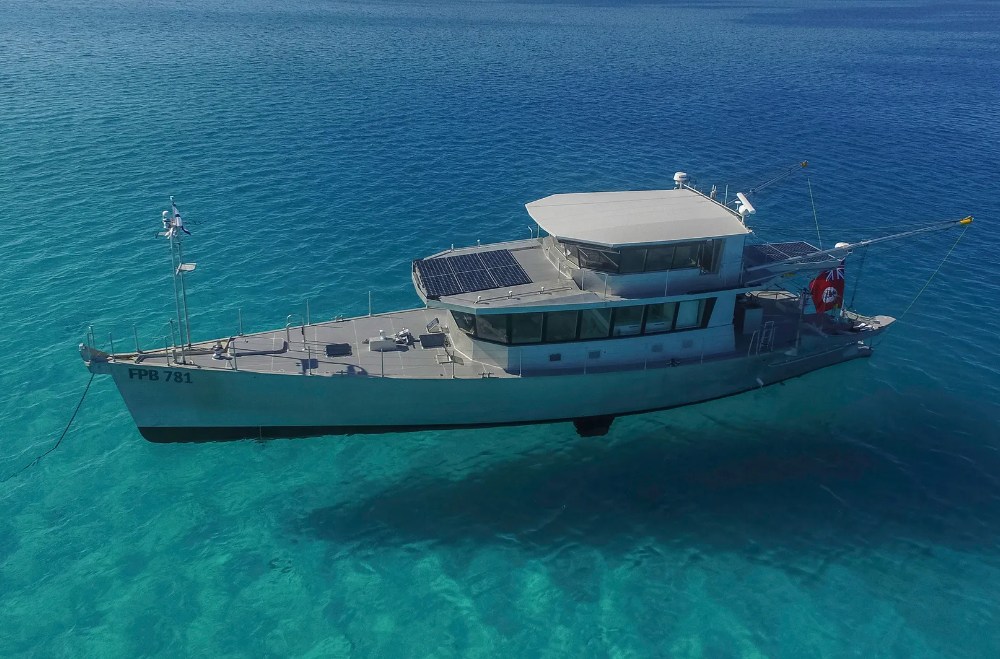
That process reached another level with WIND HORSE, the first FPB.
Steve recalls working from around 6:30 in the morning until nine or ten at night, often barely leaving his office as he worked through the enormous number of interconnected decisions involved in creating something so far removed from conventional offshore motor yachts.
Living With the Product
Perhaps the most important part came after the drawings were finished.
Steve and Linda actually went cruising.
They sailed their yachts across oceans, maintained them, repaired them and discovered which decisions had worked. With WIND HORSE, they went on to cover around 60,000 nautical miles.
That experience then fed directly into whatever came next.
It is perhaps the simplest explanation of the Dashew approach to yacht design:
“The way that you get trained in how to make the right decisions is by living with your product.”
Not simply designing a yacht.
Not simply building one.
But taking it to sea, living with every decision, discovering what you got wrong and carrying those lessons into the next boat.
Listen to the Full Episode
– BuzzSprout
– Spotify
– Apple
– YouTube
– iHeart (US Only)
Posted by Lawrence Carter (October 8, 2026)
