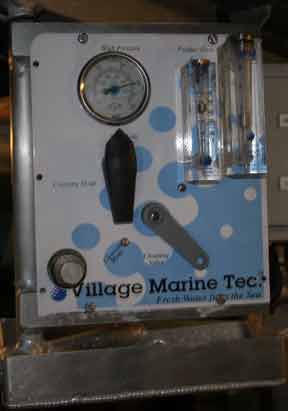
Our approach to domestic water systems has evolved over the years, with the introduction of ever more efficient reverse osmosis watermakers.
FPB 83
Following are the latest posts on Wind Horse. This section covers systems, real world performance, along with data on why we do things the way we do. For more information be sure to check out SetSail.com/WindHorse.Air Conditioning Specifications
Air conditioning specifications always involve a lot of tradeoffs.
Active Stabilizers
Of all the issues facing us during the design of this boat, none was more important than the approach to stabilization.
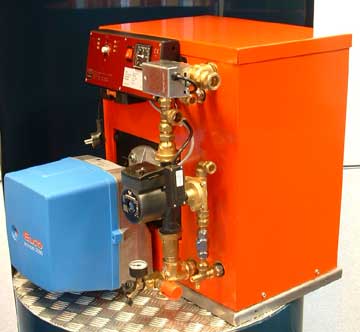
Domestic Heating & Hot Water
Of all the systems aboard our boats none is more important than good heating for the interior, and an efficient supply of hot water for bathing.
Fridge System – A New Approach
This is the first time we have not used a holding plate system in the fridge and freezer. We took this approach as on paper it appeared more efficient.
Electrical Systems
Over the years we’ve been able to fine tune our approach to onboard electrical gear.
The Drive Line
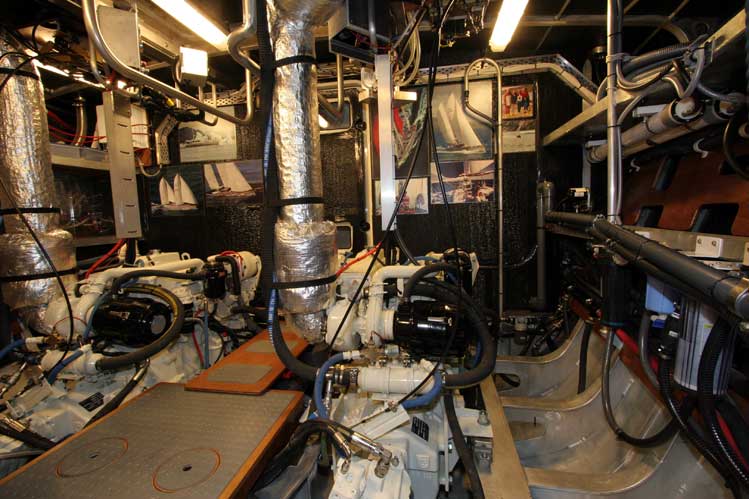
In this section we’ll cover the components of the drive line: engine, transmission, thrust bearing and CV axle, and props.
Systems
The heart of any cruising vessel – sail or power – is in its systems. It is the systems that bring you ambiance and pleasure (and, if not done correctly, a load of frustration).
Laundry Facilities
In the past we’ve used combination washer-dryers because they are compact and easy to work into the interior.
Ship’s Office
We need a fair amount of office space, as we are often at work when while we are cruising. (Although it is better to just cruise!)
Nav Station / Bridge Layout
The layout of the saloon is developed around the concept that we primarily passage with just two of us aboard, and we prefer that watch keeping, working in the galley, and just plain hanging out occur in the same area.
Staterooms
Forward Suite
There are several ways of looking at the design premise for the owner’s “suite”.
Galley
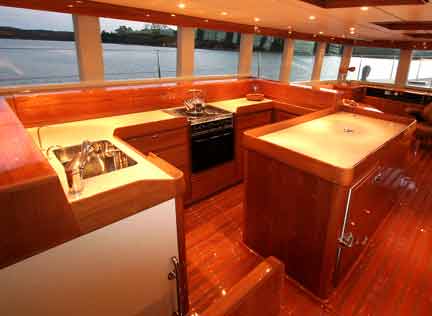
The galleys on our previous designs have worked extremely well, providing excellent storage, good counter space, and ease of use at sea. This galley goes a step beyond.
Interior Layout
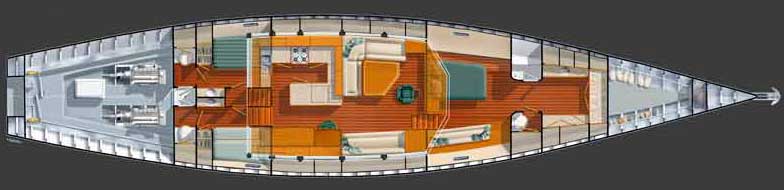
We’ve been refining our approach to cruising interior design for the last 28 years – we’re at the point where we have a pretty good handle on the combination of features required for comfort at sea and in port.
Interior
Designing an interior which looks good and is enjoyable at anchor – and works well at sea – is not easy.
The Swim Step
We first started putting swim steps on our designs in 1978. Initially they were a safety device, a way to make man overboard recovery easier.
Roll Control at Anchor
At anchor, when waves are more or less on the beam, all boats begin to roll, while comfort rapidly deteriorates.
Working on Deck
There are six scenarios working on deck, each of which is considered for both layout and hardware specification.
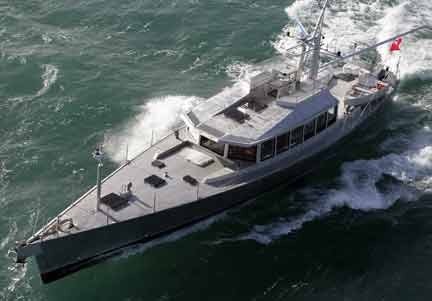
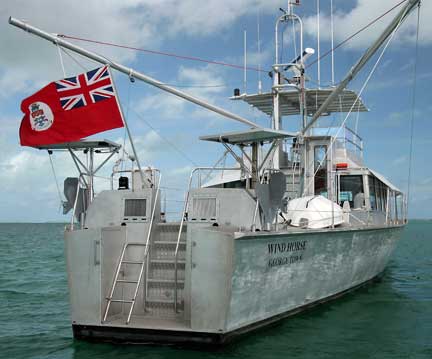
FPB 83 – Wind Horse
In the following pages we’ll take you on a tour of the FPB prototype, Wind Horse.
Tropical Considerations
Cruising in the tropics brings with it a special set of requirements because of the heat and humidity.
Flying Bridge
The flying bridge has become one of our favorite places at anchor and when on passage in pleasant weather.
Get Home System
We have spoken at length about the logic of get home systems in our previous articles.
FPB 83 On Deck
The process of developing the exterior design is never easy. There are numerous needs to be satisfied, from having a pleasant outside watch-standing station that is usable at sea, to a variety of options for entertaining on deck when at anchor, to dealing with rolly anchorages and the launch/retrieval of dinghies.
Saloon
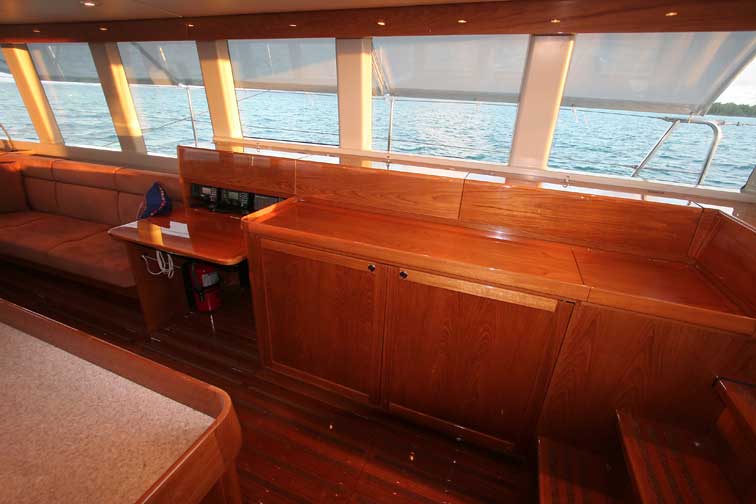
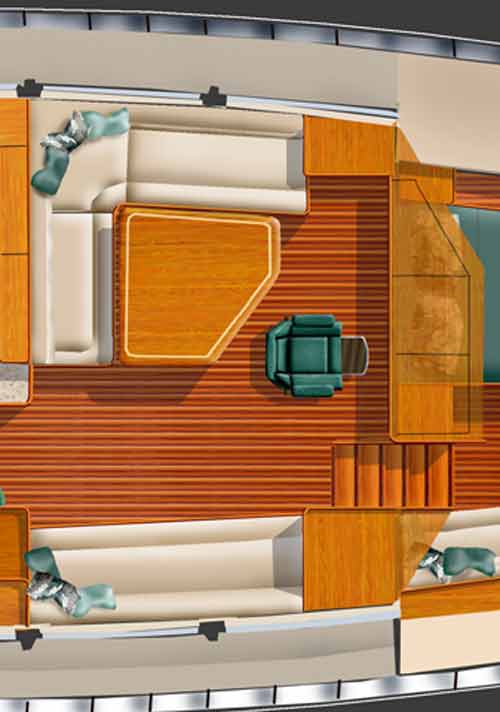
The saloon is at the forward end of this raised area, adjacent to the galley and the office. We’ve got 7-foot (2.15m) settees on each side, plus room for two more folding chairs around the table.